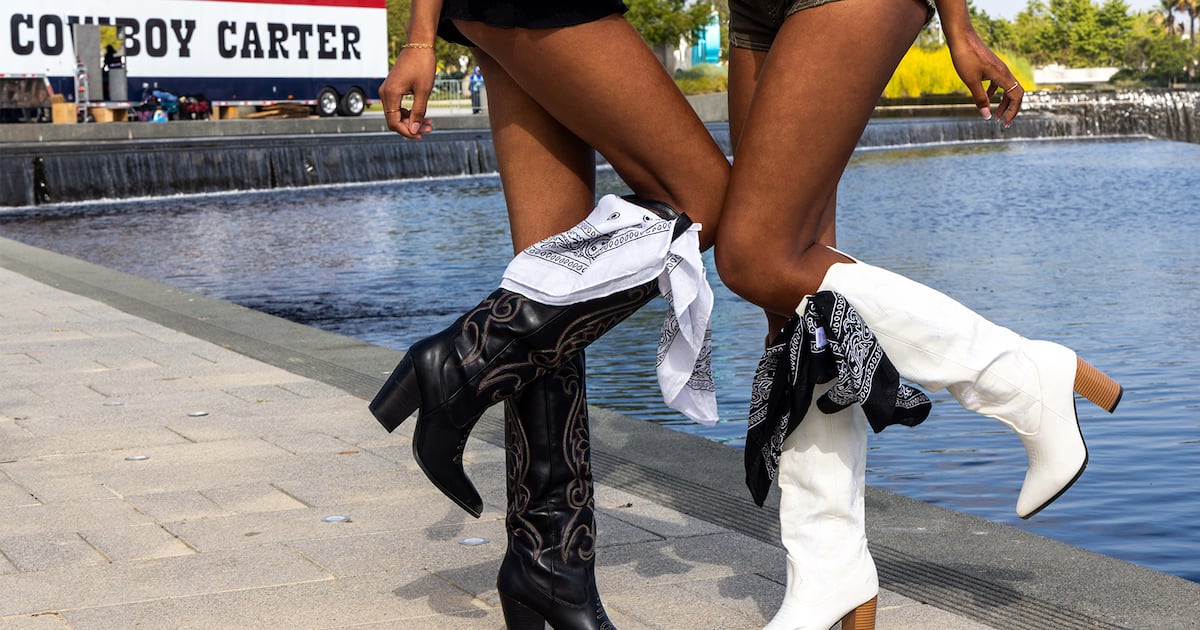
The craftsmen for Back at the Ranch in Santa Fe, New Mexico, have been making cowboy boots for three generations. Since Wendy Lane Henry founded the brand in 1990, the boots have barely changed â but in recent years, business has exploded. Her waitlist for custom orders is up to eight months, and sheâs boosted store inventory by more than 40 percent to meet demand.
âEveryone is infatuated with the West, the free-spirited lifestyle, the wide-open spaces,â Henry says. âLast year was my best year ever, and this year will be better.â
Cowboy boots are the most recognizable American contribution to global fashion, the hallmark of Western style. Theyâre symbolic of everything the cowboy represents in US culture: freedom, independence, self-reliance, self-assurance. And theyâre everywhere right now, visible in Texas, Paris, New York and on southern sorority rush TikTok. In October supermodels Gigi Hadid and Kendall Jenner graced the cover of Vogue in a Wyoming cowboy-themed spread.
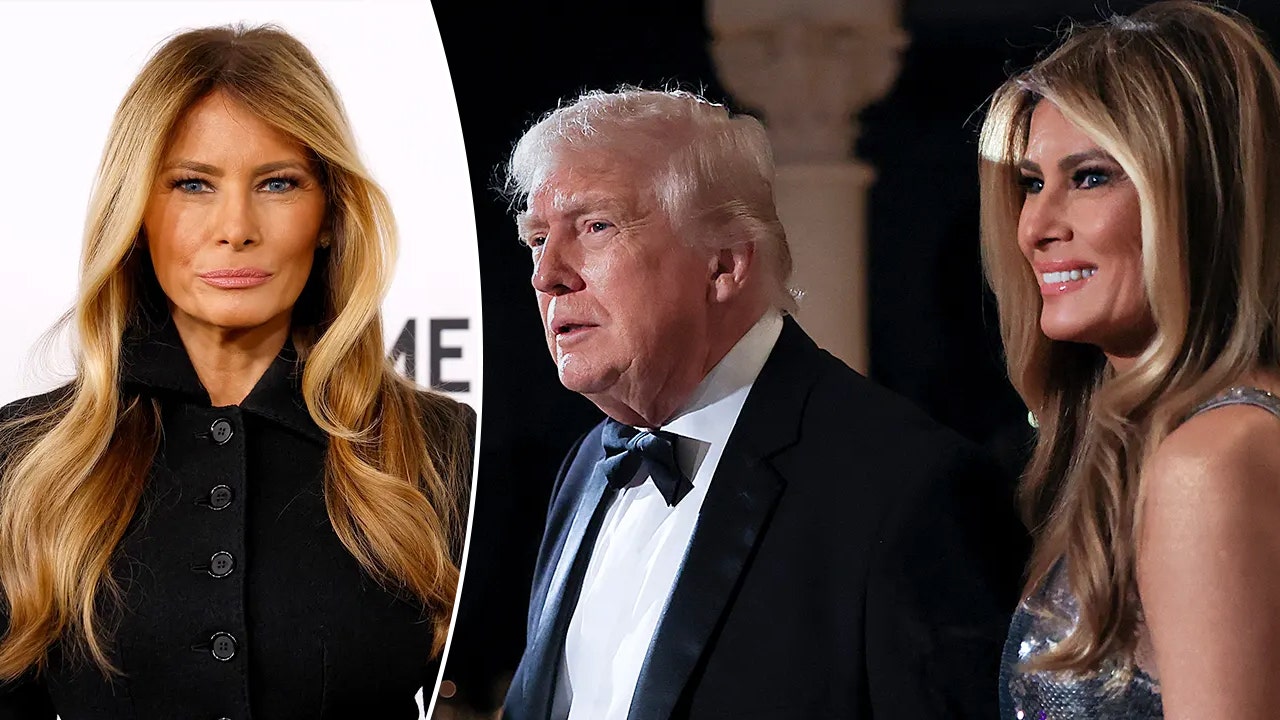
Although cowboy boots have been ascendant for years â since Yellowstone and the pandemic collided to create a Wild West nostalgia cocktail few could resist â the 2025 boot boom is no coincidence. Western style foams to the top of US pop culture in times of political unrest and national soul-searching. Americans turned to the cowboy in the wake of the Civil War, World War II and the Vietnam War. In our post-pandemic disorientation and the first months of Donald Trumpâs roller-coaster second term, Americans are once again trying to understand who we are â and who we want to be. What weâve come up with, it seems, is cowboys.
âThere is a desire to be proud of what and who we are as a country,â says Austin Ripmaster, executive creative director and vice president of brand at high-end bootmaker Lucchese. âThe cowboy and what Western culture represents is truly, quintessentially America.â
Ripmaster says the trend is part of a broader shift: Boots and cowboy style have evolved âfrom tropey Westernâ to simply American. Melissa Collins, chief marketing officer of Western-wear retailer Cavenderâs, says cowboy boots resonate because âthey carry meaning, tradition and authenticity.â Shares in the cowboy outfitter Boot Barn are up more than 440 percent over the past five years.
To meet a seemingly bottomless pit of demand, bootmakers are rapidly scaling up operations. Lucchese has been opening five stores per year (it now has 31 locations) to sell boots that cost as much as $17,000. Venture-capital-backed boot brand Tecovas is opening 14 new stores this year and sees opportunities in markets where cowboy boots havenât traditionally been popular: It opened its first New York City location in September.
âIf Iâm concerned about anything, itâs not demand for the product,â Ripmaster says. âItâs our ability to produce enough pairs.â
Cowboy Lore
The cowboy â at least his immortalised Marlboro Man image â is independent, free, hardworking, meritocratic. Heâs portrayed as White and traditionally masculine. Heâs tender with animals but dangerous to bad guys. Heâs undeniably cool. In short, an all-American hero.
Aspects of this narrative are true. Then, as now, being a cowboy was hard agricultural work. And cowboys have always cared about their aesthetic: Even in the Old West, they were known to spend a disproportionate amount of their earnings on boots. But the trouble with this cowboy as the totem of American national identity is that itâs almost entirely a myth.
Cowboys may represent a libertarian ideal of independence and self-reliance today, but in the brutally difficult American West, there were no one-man barn raises, no one-man cattle drives. âThe reality is there were no individual cowboys, because those people died,â says Richard Slatta, a cowboy historian and former history professor at North Carolina State University.
Although the mythological cowboy is typically White, from a quarter to a third of working cowboys were Black, Hispanic or Indigenous. The word âcowboyâ itself is in part rooted in slavery: Black and enslaved ranch workers were called cow âboys,â while White ranch workers were called cowhands. Women were sidelined in John Wayne Westerns, yet in the West they were often the breadwinners of cowboy marriages.
Real cowboys werenât universally beloved, either. In 1882 the Cheyenne Daily Leader described them as âfoulmouthed, blasphemous, drunken, lecherous, and utterly corrupt. They are dreaded in towns, for then liquor has an ascendancy over them.â
We have Hollywood and pulp novels to thank for our Clint Eastwood cowboy ideal. Hollywoodâs addiction to Westerns fashioned the cowboy into an outsider superman figure, often an arbiter of extrajudicial justice. He came into town on horseback. He usually got the girl. A 1949 Life magazine profile of a working cowboy noted: âHollywood has captured the cowboyâs appearance even if he has missed his spirit.â
Even the idea of the cowboy as distinctly American is inaccurate. Cowboys as a concept are almost entirely imported from cattle operations south of the US border. The boots were fashioned after those of the Mexican vaqueros (originally from Spain), with heels for holding on to stirrups and steel arches for comfort during long days in the saddle. They have tall shafts to protect the wearer from cactus thorns and deadly snakebites. They werenât made for walking.
This not-so-American origin story was largely washed away. The Old West was â like the rest of the country â a racist, discriminatory place. âThe whole culture was essentially imported and then anglicised,â says Slatta. âIt was a very purposeful erasure.â
Still, Americaâs attachment to the cowboy myth is visceral. In 2023 the Museum of Contemporary Art Denver opened an exhibition teasing apart the legend and reality of the American cowboy. It began with a photograph of a Marlboro Man ad by artist Richard Prince, to acknowledge âthe depths to which the myth of the cowboy had supplanted the reality,â says Miranda Lash, a co-curator of the exhibition and now the museumâs chief curator.
The show, which acknowledged the diversity of the real American cowboy â not all White, male or heterosexual â received critical acclaim. But when âCowboyâ traveled to the Amon Carter Museum of American Art in Fort Worth, Texas (âCowtown USAâ and the epicenter of American cowboy mythology), it was shuttered after two weeks. When it reopened a week later, it carried a disclaimer that the show was for âmature audiences.â
Says Slatta, who has devoted much of his academic career to parsing the reality underneath the cowboy story: âAt some point I gave up trying to communicate the social reality of the West. ⦠It was clear to me that the myths were winning.â
Ranch Renaissance


Cowboys tend to become trendy in the US in times of political and social upheaval. After the Civil War, the fractured nation turned its eyes to the West, a part of the country not ravaged by conflict (ignoring the violence against native populations). The region represented a romantic idea of what America could be.
Periods of economic turmoil heighten the cowboyâs allure, as the country looks inward for answers. Celebrity showman Buffalo Bill ushered in the first major cowboy renaissance in the late 1800s â a period of rapid industrialisation, immigration and urbanisation â popularising the romantic ideal and fashion of the American West. His fame peaked alongside the financial Panic of 1893, when a crushing depression hastened the end of the Gilded Age and brought a wave of anti-immigrant sentiment.
After World War II, Westerns took over television: In 1959 and â60 they accounted for 9 of the 20 highest-rated prime-time programs. In the late â70s, following decades of painful US engagement in Vietnam, presidential hopeful and former Western film star Ronald Reagan famously evoked cowboy aesthetics to tap into anxiety about a collective American identity. He wore a felt hat and cowboy boots, and he strategically used his ranch as a backdrop to decry the evils of big government, as stagflation eroded faith in Washington.
âAt some point I gave up trying to communicate the social reality of the West. ⦠It was clear to me that the myths were winning.â
â Â Richard Slatta, cowboy historian and former history professor at North Carolina State University.
The independent, aspirationally masculine maverick soon dominated pop culture through films such as Top Gun, The Terminator and the first Rambo movie (arguably a Western). And after Sept. 11 there was a marked shift into identifiably American aesthetics. Cowboy style proliferated on fashion runways in 2002 and â03. âThe collections will probably be remembered as the season of the cowboy,â the New Yorker wrote in July 2003, while the New York Times dispatch from Milan and London shows ran with the headline âMacho America Storms Europeâs Runways.â
Reagan and George W. Bush understood what Hollywood long has: It doesnât matter that fewer than 2 percent of Americans work in agriculture; if you want to have popular appeal in the US, reach for the cowboy. As technological advances, deindustrialisation and large-scale migration again became the hallmarks of 21st century America â with economic shocks that disproportionately affected rural communities and blue-collar workers â that lesson proved prescient.
When Yellowstone premiered in 2018, the soapy, revanchist drama grabbed hold of the American psyche. But it was the pandemic and the countryâs growing discontents that sent its viewership soaring. Once again the US found itself searching for a way forward and came up with cowboys.
Sexy and escapist, the show highlights a wilder, less digital way of life that appeals to a perpetually plugged-in population, while its popularity among conservatives carries a political subtext, a reaction to the feeling that America has drifted from its âtraditionalâ rural values.
âThere is no myth of the West. ⦠We know itâs hard work, and we know itâs self-reliance, and we know that itâs depending on your neighbours and your neighbours depending upon you,â Yellowstone creator Taylor Sheridan said in an acceptance speech at the National Cowboy & Western Heritage Museum in 2022. He said he hoped his shows âwould allow some of this to make its way into a place where that doesnât exist â in other words, in the cities.â
Sheridan added: âSince weâre selling Stetsons in Los Angeles, I guess weâre doing it.â
Cowboy Diplomacy


Theodore Roosevelt helped construct the cowboy myth into a potent political tool, but Reagan set the high watermark for modern politicians evoking the cowboy ethos. Promising to restore American pride and strength to a divided country, he spoke in almost mythical Western terms about âgetting the government off your backs.â
The cowboy has since become a convenient shorthand for ascendant conservative ideologies that exalt individual action and reject government constraints. âThe idea is thatâs what makes a good society â that if individuals are left to their own designs, they will prosper,â Slatta says. âItâs a great reading of the cowboy myth. Itâs a terrible reading of their social reality.â
History suggests cowboys were all about collective action. In 1883 they tried to unionise against wealthy ranch bosses, striking in Texas for better pay and working conditions â a movement that was ultimately crushed. Less than a decade later, cowboys were folded into the rural coalition of the short-lived Populist Party, which sought to unite farmers, ranch hands and other poorer communities in the South and West.
âThe idea of the cowboy relates strongly to populismâ and the notion âthat the people are the moral good in society,â says Kristin Lunz Trujillo, an assistant professor of political science at Boston College who specialises in rural communities. When âa lot of people feel disconnected from those institutions that have power in society,â she says, âcowboy culture provides an alternative.â
But the definition of populism has evolved over time. Where the Populists of the 1890s stressed solidarity and economic justice, modern conservative populism exalts the individual against elites and government. (How âthe elitesâ are defined is a moving target.) In that shift the right has focused on perceived threats to symbols of freedom and self-reliance.
And for almost as long as there have been cowboys, thereâs been fear of their extinction. In the late 1800s the cowboy myth seized the American imagination just as the real cowboy was becoming less vital, sidelined by technologies such as trains that could move cattle more efficiently from ranches to slaughterhouses. Since then the archetype has had a darker edge: that the cowboy, and all he represents, is forever under threat from the relentless march of progress.
The Life magazine profile from 1949 warned of cowboys being replaced by âfeebler menâ who worked less, fared worse with women, lacked money and demanded higher pay for fewer skills. Today the tantalising cowboy dream is back at another moment when traditional masculinity is ascendant, and nostalgia for an imagined America is animating the political party in power. Donald Trump Jr., born and raised in Manhattan, has worked hard to align himself with rural mythologies â right down to his American-flag-inlaid cowboy boots.
Boots on the Ground

In 2025 the cowboy boot carries all that history into a deeply divided America. Political polarisation âcreates a desire for there to be some sort of unifying [symbol], some sort of redemption,â Trujillo says. For conservatives, cowboy aesthetics offer an âidealised nostalgia, a validation of their values and lifestyle choices.â For others, wearing cowboy boots is an overt act of reclaiming the cowboy as Black, Indigenous, female or queer â identities present in the Old West but erased from its myth.
Beyoncéâs genre-defying Cowboy Carter album and tour took explicit aim at the exclusionary, whitewashed cowboy mythology and the country music establishment that clings to it. Bootmakers credit her for fueling a surge in sales, as Western style draws in a more racially and geographically diverse base. Gay pop star and Missouri native Chappell Roan released a banjo-laden country single about lesbian desire and often performs in cowboy drag. Country artist Shaboozey, a Nigerian American from Virginia who dons cowboy gear, last year tied the record for the longest-running No. 1 song on the Billboard Hot 100 â a milestone first set in 2019 by Black gay cowboy pioneer Lil Nas X.
âEven though these looks and styles are coded in parts of society, or are seen as reactionary, there are lots of communities proudly taking ownership and offering an alternative narrative,â says Sonya Abrego, a fashion historian specialising in 20th century American style and Western wear. âThey are not letting MAGA style claim this.â
Perhaps thatâs the ultimate power of the American cowboy: He can be anything you want. âThe cowboy is so stretchable and malleable, because itâs so deeply ingrained in the idea of individualism,â says Lash, the curator at MCA Denver. What looks like a unifying aesthetic isnât, Abrego notes, âbecause people are coming at it from so many different approaches.â For some Americans, the cowboy is a callback; for others, a provocation or a reclamation. And then thereâs the big middle â most people â who donât really care about what the cowboy represents. They just think the boots look cute.
As the cowboy trend spreads, meaninglessness may be exactly where itâs headed. âThe more you see things, the more they become neutral symbols,â Abrego says. The cowboy boot is no different, âand maybe thatâs the best place for it.â
By Madison Derbyshire