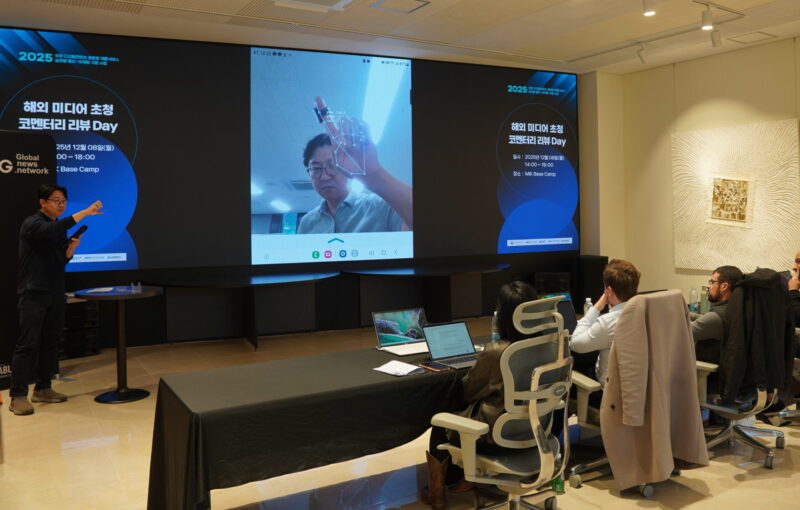
Spending time in Seoul has a way of sharpening your perspective on where technology is actually heading—not just in pitch decks, but in practical, deployable solutions. During a recent Global Media Review Day hosted by Aving News, I joined fellow international media to evaluate four Korean startups that collectively reflect the country’s unique innovation DNA: deeply technical, globally ambitious, and relentlessly focused on real-world application.
Representing Innovation & Tech Today, my role was not to be impressed by prototypes alone, but to interrogate market readiness, scalability, and clarity of vision. From smart textiles that blur the line between therapy and apparel, to sensors that let machines “see” what humans can’t, to spatial computing interfaces and immersive vocational training platforms, the breadth of ideas on display underscored why Korea continues to punch above its weight in global tech.
What follows is a closer look at the four companies that stood out, and what their journeys reveal about the next phase of digital convergence in Korea.
Wave Company
Turning Clothing into Continuous Therapy
Wave Company’s pitch is deceptively simple: to heal and protect, one wear does it all. Beneath that slogan is a sophisticated fusion of smart textiles, bio-silicone coatings, and sensor-driven insights that could redefine how we think about recovery and performance.
Unlike traditional compression garments or kinesiology tape, Wave’s approach uses silicon-coated textile patches applied directly or integrated into garments that replicate and, in some cases, outperform conventional physical therapy taping. Independent studies cited during the review showed reduced muscle fatigue and lower lactic acid buildup compared to standard compression solutions, with recovery benefits that extend even after the garment is removed.
Wave’s ecosystem goes beyond fabric. Its TracMe app, Elecsil biosensors, and Tracksil muscle-balance technology work together to deliver AI-driven coaching insights across more than 240 workouts. Athletes, physical therapy patients, elderly users, and clinics all emerged as clear target segments, though the company is still navigating how to separate its B2B hardware narrative from its consumer-facing wearables.
Already selling in eight countries with roughly $2.7 million in annual sales, Wave is preparing for a Series A raise while balancing growth with capacity. The next inflection point will be its B2B dashboard; these tools allow clinicians and trainers to visualize patient data meaningfully. If executed well, Wave could become a foundational platform in digital musculoskeletal health, not just a premium activewear brand.
Stratio

Solving “Blindness” with Spectral Vision
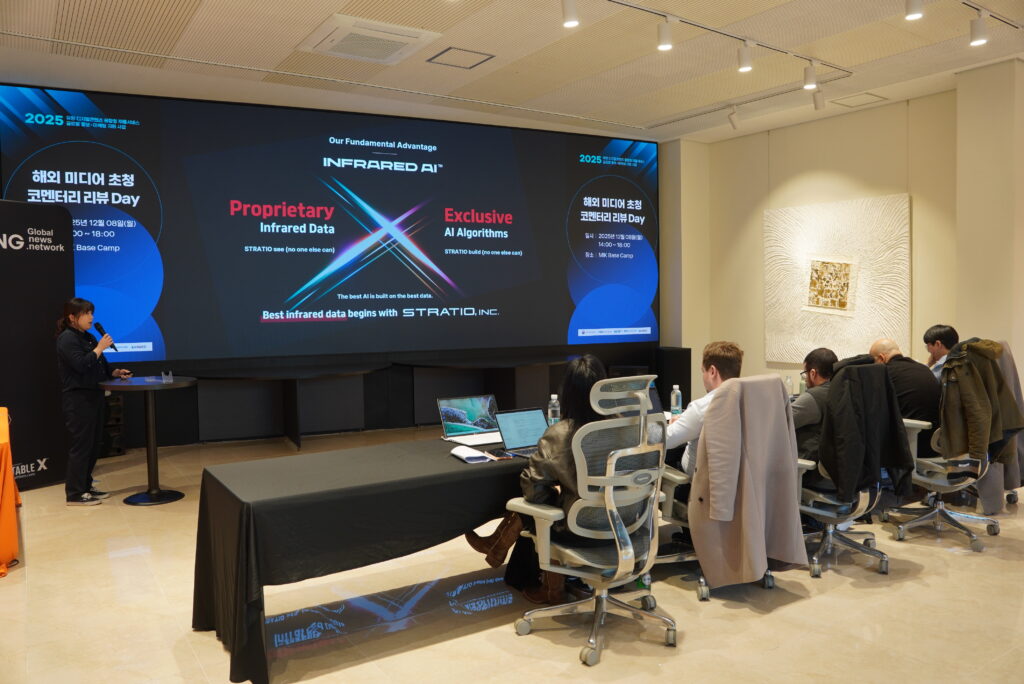
If Wave is about what the body feels, Stratio is about what machines can finally see. The company’s core innovation lies in compact, affordable short-wave infrared (SWIR) sensors paired with proprietary AI algorithms. This technology reveals information invisible to standard cameras or the human eye.
Stratio’s positioning is bold: blindness is now solved. In practice, that means identifying materials by composition rather than appearance which is critical for recycling, agriculture, counterfeit detection, and even explosives or illicit substance identification. Compared to better-funded competitors, Stratio claims a compelling edge: 10x lower cost, 10x lower power consumption, and double the accuracy.
What impressed me most was the maturity of the technology. With a Technology Readiness Level of 9, Stratio’s sensors are already being used by major electronics manufacturers, with developer kits and spectral image sensors priced well below industry norms. Yet the company is cautious not to oversell. One internal challenge discussed candidly was ensuring customers understand the difference between detection, analysis, and what the current generation of sensors can realistically deliver.
In the short term, Stratio is focused on increasing customer adoption and shortening turnaround times. Long term, its success hinges on semiconductor partners adopting its “recipe” at scale. If that happens, spectral vision could quietly become a standard feature across smartphones, vehicles, and smart infrastructure.
COXSPACE
Making Spatial Computing Intuitive
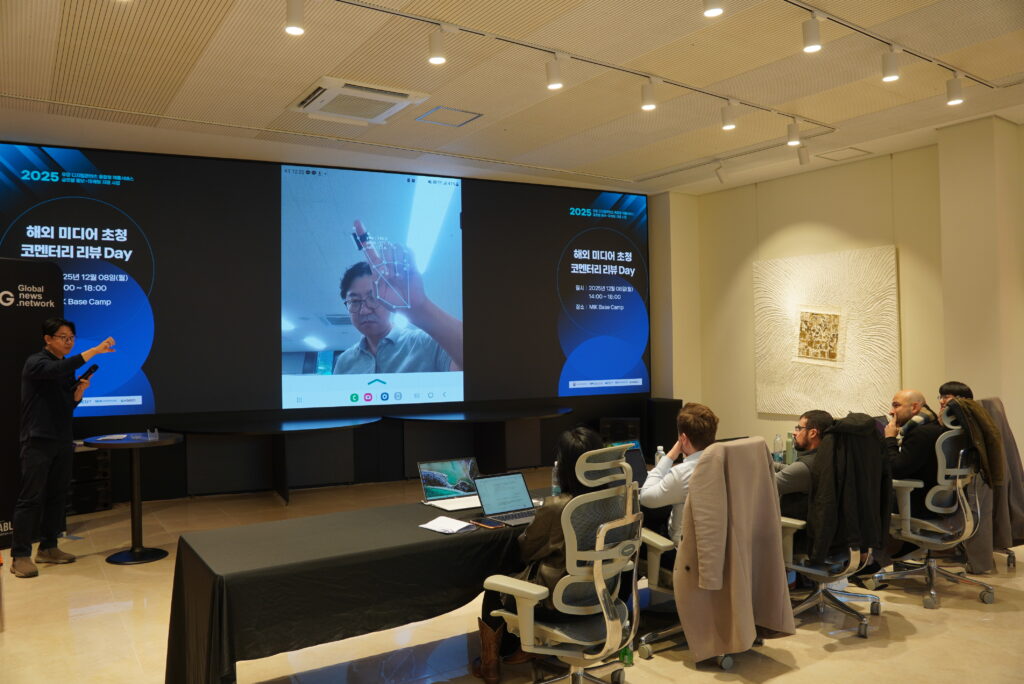
COXSPACE sits at the intersection of XR hardware, gesture recognition, and human-centered design. While many AR and VR solutions struggle with clunky controls, COXSPACE is betting that precision spatial input delivered through intuitive air-mouse and gesture-based interfaces will unlock mainstream adoption.
The company’s proprietary technologies include real-time 3D position tracking, camera fusion, and machine-learning-driven gesture detection. Rather than positioning itself as just another headset maker, COXSPACE is building a universal “space controller” that works across smartphones, tablets, AR glasses, and gaming environments.
With more than 8,200 crowdfunding backers and $854,000 raised, COXSPACE has validated global interest, particularly across the U.S., Europe, and Asia. The next challenge is scale: securing certifications, deepening partnerships with tech giants like Meta, Google, and Samsung, and expanding B2C visibility especially in the U.S. market.
What stood out during the review was COXSPACE’s emphasis on education. By integrating XR manuals and guided experiences, the company aims to lower the intimidation barrier that often accompanies immersive tech. If spatial computing is to become everyday computing, COXSPACE’s focus on intuitive control may prove just as important as display quality.
Big Pictures
Reinventing Vocational Training Through Simulation
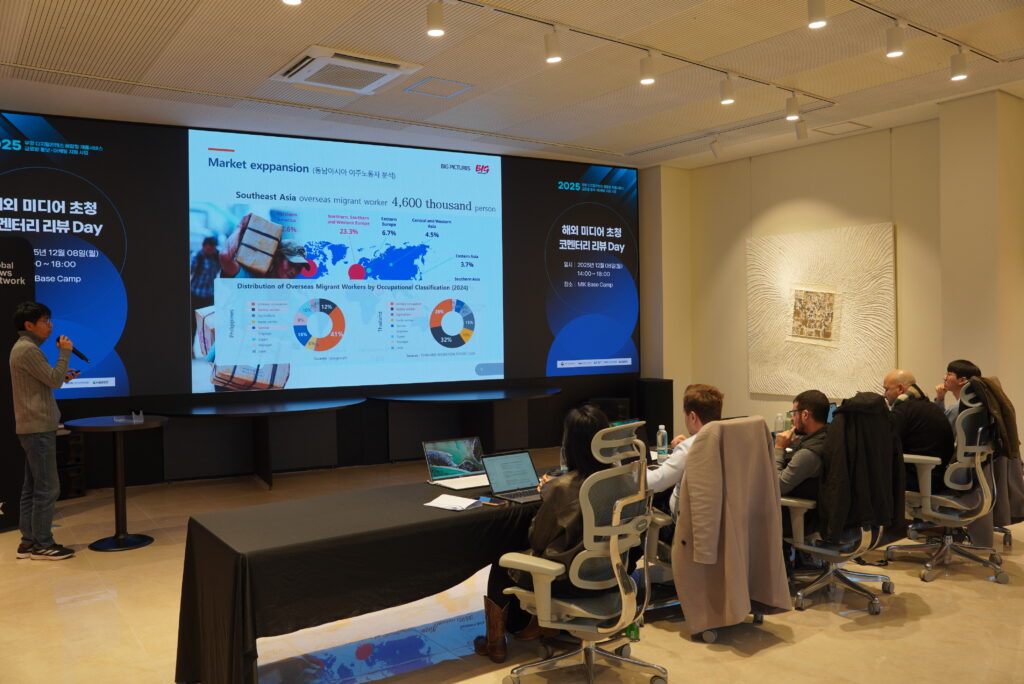
Big Pictures tackles a less glamorous, yet critical problem: how to train skilled workers faster, safer, and at lower cost. Supported by government-backed vocational programs, the company develops VR-based simulators that replicate industrial machinery and real-world job environments.
Currently deployed across 89 locations in Korea, with international expansion into the Philippines and Australia, Big Pictures operates primarily in B2B and B2G channels. Its platform combines hardware, simulation software, and a learning management system to deliver consistent training regardless of weather, location, or equipment availability.
The long-term vision is ambitious: a single simulator capable of supporting multiple devices and industries through a unified interface. This could dramatically reduce reliance on physical machinery during training, minimizing risk while accelerating skill acquisition. As labor shortages and reskilling pressures intensify globally, Big Pictures’ model feels both timely and exportable.
A Broader Takeaway from Seoul
What tied these four companies together was not a single technology trend, but a shared philosophy: innovation must earn its place in the real world. Seoul’s startup ecosystem excels at bridging R&D depth with practical deployment that is often supported by government programs, but driven by global ambition.
For me, this Media Review Day reinforced why Korea remains a bellwether market. While startups there might be experimental, they are building platforms meant to scale internationally. As these companies refine their messaging, partnerships, and go-to-market strategies, I expect to see more of them moving from “promising” to indispensable on the global stage.
If Seoul is any indication, the next wave of digital convergence will be more human, more intuitive, and more impactful where it counts.