As the Nepali night takes on the texture of velvet, the party naturally divides. The men sway in a circle, singing plaintively. The women surround an elderly lady who smokes tobacco rolled in writing paper. And I settle into swapping stories with the girls. Alina and her younger cousins Miching and Blinka may be draped in the silks and heavy jewellery of the Indigenous Aath Pahariya Rai community, but theyâre as keen to talk love and travel as any young women. âIâm too independent to get married until Iâm very old,â declares 21-year-old Alina. âWhen I graduate, I want to go to Paris â and then come home to Sipting. Lifeâs peaceful here and the air is clear.â
Iâm in the little-visited Dhankuta region of eastern Nepal on a trip hosted by Community Homestay Network (CHN). This social enterprise is working with governmental organisations and non-profits such as Human and Social Development Centre (Husadec) to support women â including Alinaâs mother, Prem Maya â to open their homes to travellers. Since launching with just one homestay in Panauti, south-east of Kathmandu, in 2012, CHN has grown to more than 362 families across 40 communities. This is the first in the countryâs rural east.
As rising temperatures, seasonal flooding and erratic monsoons force droves of Dhankutaâs subsistence farmers over the border into India, this remote region is turning to international tourism for the first time. Empowering women to earn without having to leave their villages, and working on sustainable rainwater-harvesting solutions, is central to this vision.
While tourism contributed about $2.2bn (£1.64bn) to Nepalâs GDP in 2024, it remains concentrated around Khatmandu, trekking routes such as Everest and the Annapurna Circuit, the second city Pokhara and Chitwan national park. The result is overloaded infrastructure, traffic jams at key viewpoints and the economic benefits of the industry concentrated into just a few hands. Schemes such as CHN hope to spread the tourist dollar and offer visitors a memorable experience away from the crowds.
After a 40-minute flight from Kathmandu and a two-hour-plus bus journey along a road that winds upwards like a series of sickle moons, our first stop is the town of Dhankuta. It served as the regionâs administrative hub until the 1960s, when it sank into a slumber. At first, it appears the governmentâs new tourism policy might not have registered with local residents. As I wander past the orange-painted buildings, the sewing machine in a tailorâs shop stills as its owner looks up at me in astonishment; a shopper wearing a shirt emblazoned with the words âMamaâs little manâ drops his bags to stare; and a woman freezes in her doorway, oblivious to the dal dripping from the wooden spoon sheâs holding.
âIn the last few decades this neighbourhood was so empty that jackals roamed the streets,â explains our guide, Kalpana Bhattarai. âLocals painted it to celebrate their history as orange growers before climate change â and in the hope of appealing to visitors. It seems theyâre a little surprised to see it actually working.â She flashes a winning smile, and they all beam back.
Bringing as many local people as possible into the tourism supply chain is central to CHNâs ethos, which is why it also runs programmes to train youngsters as guides. After a night in the comfortable Hotel Murchunga International in Dhankuta we meet one of the programmeâs first two graduates, Nabin Rai of the Aath Pahariya Rai community. This morning, heâll be leading the 7½-mile forest hike to his home village of Khambela for the first time and, given my incessant questions, I suspect this is a baptism of fire.
As we walk, he talks about his life as the only young man remaining in the village â staying behind partly to care for his disabled father and partly out of love for this place. âWhen I come to the forest, it feels like my own house,â he says, leading the way along a path studded with silver silica particles that gleam like the Tamor River below. âYou can feel the gods here.â
As we enter Khambela through trees woven with jasmine, Nabin points out the rainwater storage tanks installed by the International Centre for Integrated Mountain Development (ICIMOD), which help to supplement the unreliable supply from the government pipeline two hours away by foot.
The hike ends with vegetable curry in a courtyard owned by a woman in her 60s who tells us to call her Didi (big sister), and observes our fascination with her home with quiet amusement. As we prepare to leave, she presses a veena into my hand: a hand-carved instrument that hums grudgingly when I blow through it and tug its string with clumsy enthusiasm.
After another night at our hotel, we wander round Dhankutaâs haat (bazaar), where Rais, Magars, Limbus and people from several Hindu castes haggle for everything from buffalo-skin stools to cucumbers as fat as a childâs leg. Then we take the bus to Sipting to meet the Aath Pahariya Rai family, our hosts for the next few days.
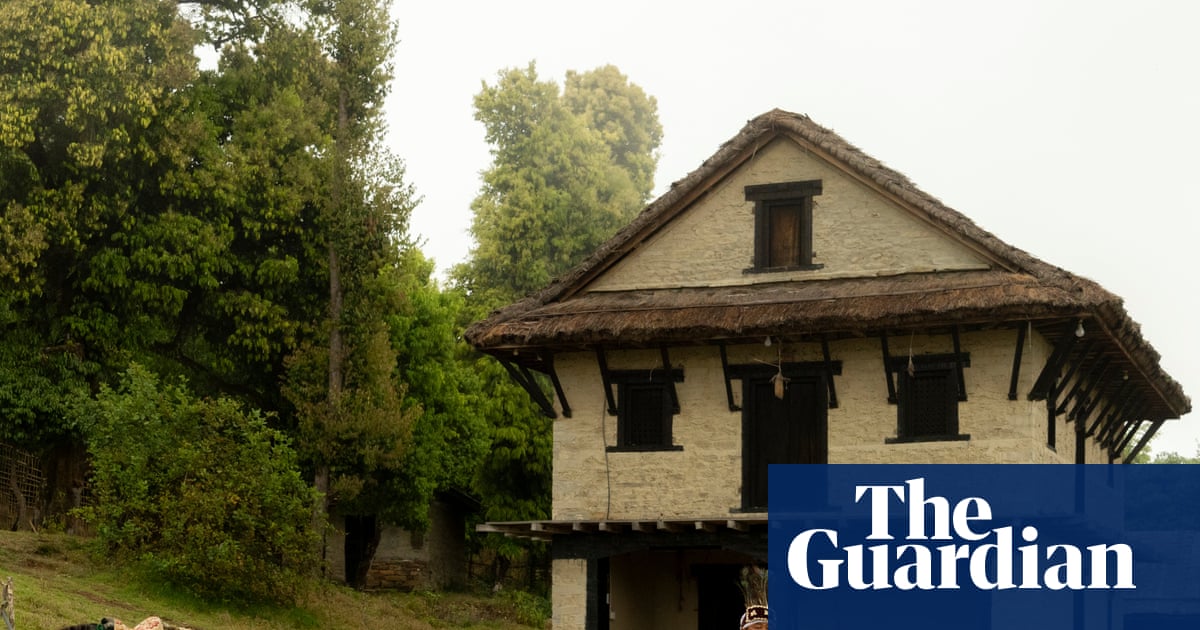
Prem leads the way up a dirt staircase hewn from the mountain to her home, the highest in the village. From its squat toilet to three bedrooms haunted by a kitten called Nimki, itâs impeccably clean and has arresting views over the valleyâs forested floor.
after newsletter promotion
She shyly points out the water and fresh soap by my bed. âIâm not sure where youâre from and havenât seen many people who look like you, but I am very glad youâre here,â she says. A towel folded in the shape of a butterfly and the light left on â a gesture that always reminds me of my parents â suggest that this couldnât be more true.
Over the next few days, I adjust to the rhythms of life in Premâs house: the scent of cow dung and woodsmoke as I learn to fold large leaves that will be used as dishes; the way the valley appears almost flat beneath the midday heat, and becomes soft and deep in the afternoons; Alina recalling that when she was little and her father, Ram, carried her to bed, she fancied the stars were walking with them.
âI canât read or write beyond my name and have never earned my own money before. Now Iâm a businesswoman,â says Prem, watching with approval as I demolish a millet pancake bursting with potato curry.
By day, Kalpana leads us on intriguing outings. At Dhoje Dada, we climb through a mogul cemetery in a cloud that echoes with the calls of cuckoos, only for it to clear in rapid, smoke-like wisps to reveal the sunrise. As darkness swallows the mountains at Kachide, we harvest sour tree tomatoes and learn local recipes from a woman who is using the income to fund her daughtersâ university educations.
The road winds through dripping rhododendron forests and mountain villages where I sense that we are the first westerners local people have ever seen.
At Cholung Park, most visitors seem more interested in watching me receive a blessing from a Mundhum samba (a figure in charge of rituals for the Limbu people, who flicks a leaf on to my throat that clings like a damp butterflyâs wing) than browsing the museumâs collection of sacred Limbu artefacts. Given the queues that now form at the peak of Everest and on Annapurnaâs trails, getting such an unfiltered glimpse of Nepali life feels like an enormous privilege.
For my final breakfast in Sipting, Ram watches through the window while Alina and Prem fill my pockets with freshly picked passion fruit and tuck a sprig of mugwort behind my ear to ward off evil spirits on the road to Janakpur. Prem patiently attempts to braid a lacha dori (a colourful thread adorned with beads) of Alinaâs into my slippery bob. âWeâre so sad to see you leave,â she says. âCome back whenever you like â this is your home now.â
The trip was provided by Community Homestay Network; its eight-day Eastern Nepal: The Road Less Taken adventure blends nature, Indigenous culture, homestays and hikes and costs US$2,359 for a single traveller, $2,657 for two or $3,597 for a group of four, including a local guide, ground transport, accommodation and most meals. Many shorter personalised trips and packages are also available. Responsible tourism in Dhankuta is being implemented through the HI-GRID Project, supported by the Australian government and led by ICIMOD. For more information on travel to Nepal, visit ntb.gov.np