

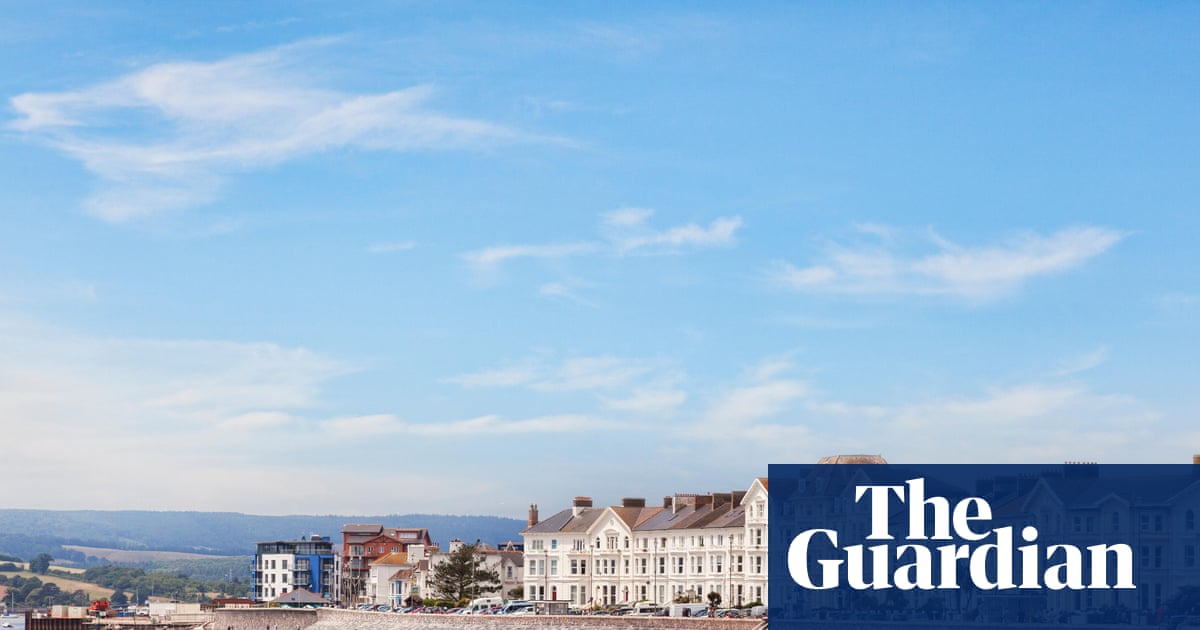
The wide Exe estuary glides past the window. Leaning back in my seat, I watch birds on the mudflats: swans, gulls, oystercatchers and scampering red-legged turnstones. Worn down by a busy, admin-heavy summer, Iâm taking the train through Devon for a peaceful break that hasnât needed too much planning.
Exmouth is a compact, walkable seaside town, easily reached by train on the scenic Avocet Line from Exeter. No need for stressful motorway driving and, once youâre there, everything is on tap: beaches, hotels, pubs, shops and cafes, alongside gentle green spaces and ever-changing seascapes.
Exmouthâs art deco-style seafront Premier Inn is 10 minutesâ stroll from the station, through flower-filled squares and gardens, and will store bags if you turn up early. A decade of sea air has battered the buildingâs exterior, but the restaurantâs floor-to-ceiling windows mean breakfast comes with a view of the sea and dune-backed estuary. The open-top 95Â bus to Sandy Bay stops almost outside.
I drop my luggage and wander the few steps down to Exmouth beach. The soft tawny sand is crisscrossed with gull footprints. Itâs a warm day and I get in the water straight away. The temperature is perfect, though I feel a strong current. I keep close to shore, looking out at the neogothic tower of Holy Trinity church and the seafrontâs big wheel.
Afterwards, a walk around town morphs into a cafe crawl. Lured by the smell of baking scones, I start with a mug of tea outside Bumble and Bee in Manor Gardens, with its begonia baskets. Nearby, along a wide path with a waterwheel, lily pond and magnolias, a baby T rex and protoceratops are hatching out of reptilian eggs.
They are part of Exmouthâs Dinosaur Safari, featuring 17 life-sized models that were unveiled in 2016. The townâs striking fossil-rich red sandstone cliffs are part of the Jurassic Coast, which has been feted by palaeontologists for centuries.
The smell of fresh bread wafts from several bakeries and bacon is being fried at the butcher and deli Lloyd Maunder. In a former stables and cottage nearby, the volunteer-run Exmouth Museum is one of those packed and atmospheric troves of musty local stuff: clay pipes, Edwardian capes, butter pats, bramble scythes.
Near the marina, the fishmonger is shelling whelks outside Fish on the Quay. âBest whelks in town. We cook them ourselves,â he tells me.
âOnly whelks in town,â laughs his colleague. I chew some by the waterâs edge before heading to Land and Sea for grilled mackerel with pickled samphire.
Just being here is a tonic, slowly exploring the flower-hung gardens and two-mile long beach. I stop for a while at a free afternoon concert outside Exmouth Pavilion and doze off in a deckchair among palms and pale Michaelmas daisies. I wake sufficiently rested to visit the National Trustâs A la Ronde, a 16-sided house on the edge of the town, designed by cousins Jane and Mary Parminter in the mid-1790s. The 57 bus takes just a few minutes to drop me at Courtlands Cross, close to the house with its oak-framed views of the Exe.
A la Ronde is stuffed with souvenirs and decorative fantasies: a seashell-covered gallery that took 10 years to create, an ornate frieze made from feathers, walls full of sketches and silhouettes. There is a secondhand bookshop and the gardens offer playful diversions: croquet on the lawn, shell-themed board games on the orchard tables and a sign that says âLie down. Look up at the cloudsâ.
I decide to walk the couple of miles back to town. A signed path leads down through meadows to the Exe Estuary Trail, a popular cycle ride with tunnels of butterfly-magnet buddleia and a maritime smell of stranded seaweed. âTea garden openâ says a chalkboard by the path at Lower Halsdon Farm. The scones are warm and come with clotted cream from Langage Farm near Plymouth. I notice how quiet it is. Four times an hour, trains hoot and hurtle past on the waterside railway. Otherwise, thereâs little sound save the plaintive cries of seabirds on the sandbanks and susurrating poplars overhead.
Next morning starts with a radiant early dip in gold-lit water and a short seaward stroll to buzzing Heydays and the neighbouring Hangtime beach cafe, which serves bowls of granola heaped with berries and bananas, and bagels full of rocket, chilli jam and halloumi. A few steps inland, I cross the Maer nature reserve. Itâs a big, sandy, grassy area, sprouting clumps of silvery sea holly and yellow cups of evening primrose. Thereâs a long-necked brachiosaurus on the far side of the field (that dino safari again). I sit nearby, in the low branches of an evergreen holm oak, and listen to a chiffchaff singing overhead. Heading through parks and well-signed leafy pathways, there are flowers everywhere, from clifftop agapanthus to a bank of pink cyclamen under a sycamore.
after newsletter promotion
For a long, relaxing lunch I head to the River Exe Café, a floating restaurant in the middle of the estuary, reachable only by boat (I take the bespoke hourly ferry from Exmouth Marina). Surrounded by gently rocking waves, I eat sea bream with capers and buttery new potatoes. The cafe is only open from April until the end of September and thereâs a waiting list for reservations, but you can get lucky â as I did â with occasional cancellations.
Cormorants stand guard on a wrecked boat nearby. Local poet Jennifer Keevill compares them to âmenacing dinner guests, all in blackâ. Her poems evoke Exmouthâs waterscapes: seabirds, sunsets, crumbling cliffs, kite surfers, Christmas Day swimmers. I head back to the beach for an evening dip and supper in the Premier Innâs own restaurant. Iâd usually look for somewhere more distinctive, but Iâm tired and itâs right here. The hotelâs seafront terrace, with tubs of lavender and French marigolds, turns out to be a good place to watch the sun set over the sea and eat plates of inexpensive pub-style grub.
Next day, inspired by Keevillâs poem Ferry to the Other Side, I take the seasonal boat across to Starcross (April-end of October) and walk a circuit past the brackeny deer park at Powderham Castle, up through groves of sweet chestnuts and down past marshes full of water mint and warblers. From the ferry, there are distant views of Exmouth and its âlandmark buildings / a clock tower, a cafe, a row of old housesâ. Back on the east bank, I stop at Land and Sea for a valedictory half of malty Otter Ale and then a crisp beer from Teignworthy brewery on the glass-walled balcony of The Grove. Looking out across the sunlit water, I feel any trace of tension slip away.
Itâs my last evening and Iâm loath to leave. Local resident Geoff Crawford is enthusiastic about Exmouth: âIâve lived here 14 years. Travelled the world all my life ⦠and I love this place more than anywhere else.â He suggests more eateries to sample: âhidden gemâ La Mar, a bistro above the Beach pub, and tiny backstreet Loluliâs Fire and Fish, âa take away cooked-over-coals fish shopâ.
An easy escape and seafood-loverâs paradise, Exmouth is a restful place to decompress beside the water. There are walks, boats and buses on the doorstep if you need them, but itâs also ideal for just being. Sit back, relax and watch the sun set.
This trip was supported by GWR and Premier Inn (rooms from about £50 a night). More information from Visit Exmouth

