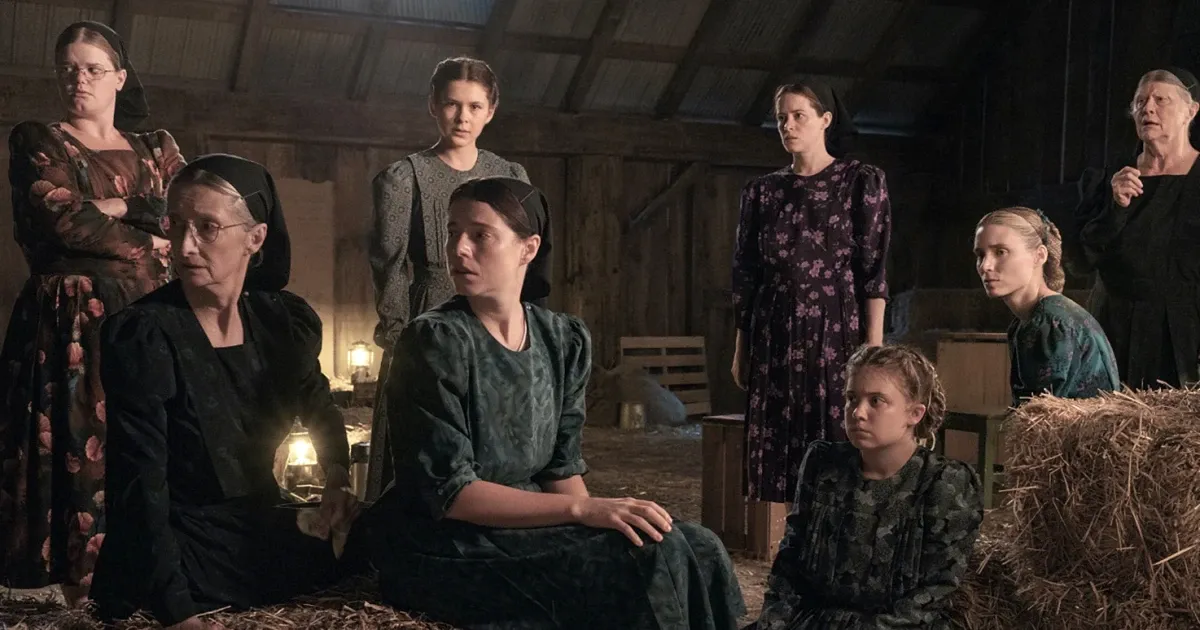
Women Talking is a 2022 drama movie directed by Sarah Polley and based on Canadian author Miriam Toews’ book of the same name. The book presents the true story behind the lives of the women in a Mennonite colony in the aftermath of sexual abuse by the men of their village. Straight away, the audience is thrown into a very intense, crippling, and gut-wrenching situation. The abuse is not a visual part of the film, but the conversations held by the abused women draw a painfully clear picture of the immeasurable degree of violence that they had endured. The whole movie is set in a barnyard in which a council is formed to decide the fate of the injured women. The closed setting is meant to advance the agenda of the movie which is to dive into the consciousness of the victims and to voice their own take on the story.
The men left the village to bill out the man who was accused and taken into custody. It is now the women’s only chance to meet up, in secret, in order to discuss, understand, and have a better grip on the abuse that was happening to them while they were anesthetized. They learn that their injuries are not due to a demonic attack, as they were made to believe, but were inflicted on them by the actual men of their community. This shocking discovery pushed them to form a council in order to vote for one of those three options: Do nothing, stay and fight, or leave.
In order to come to a conclusion about the vote, a central question was asked: Can such assault be forgiven?
Forgiveness As a Misconstrued Biblical Notion
The thing to understand about the villagers is that they are religious people. The abused women all have very strong faith in their religion and are devout Christians. They sing hymns, recite bible verses and exchange biblical stories and metaphors. Consequently, they try to understand their abuse from the Christian point of view. They strive to find an answer in the bible to the peculiar situation from which they are currently suffering.
Although the women exhibit opposing opinions, there is a certain misinterpretation of the act of forgiveness that is especially portrayed through the character of Scarface Janz, played by award-winner Frances McDormand. She states: “It is part of our faith to forgive” otherwise, “We forfeit our places in heaven.” She presents forgiveness as an obligation, a duty, and the only key to entering the gates of eternal bliss. Such a flat and thoughtless interpretation of forgiveness leaves little room for retribution, justice, and rightful condemnation.
If the bible entices people to forgive 77 times, then there should be a 78th caliber/degree sin that defies forgiveness or that can even turn forgiveness of others into a sin against oneself. How can we scale forgiveness? What is an unforgivable act? How to draw the boundary between forgiveness and self-harm? And finally, can we speak of forgiveness if the perpetrator is not even sorry? These are the questions that Manitoba’s Christianity alone could not answer during the women’s debate.
Forgiveness As an Antithesis of Justice

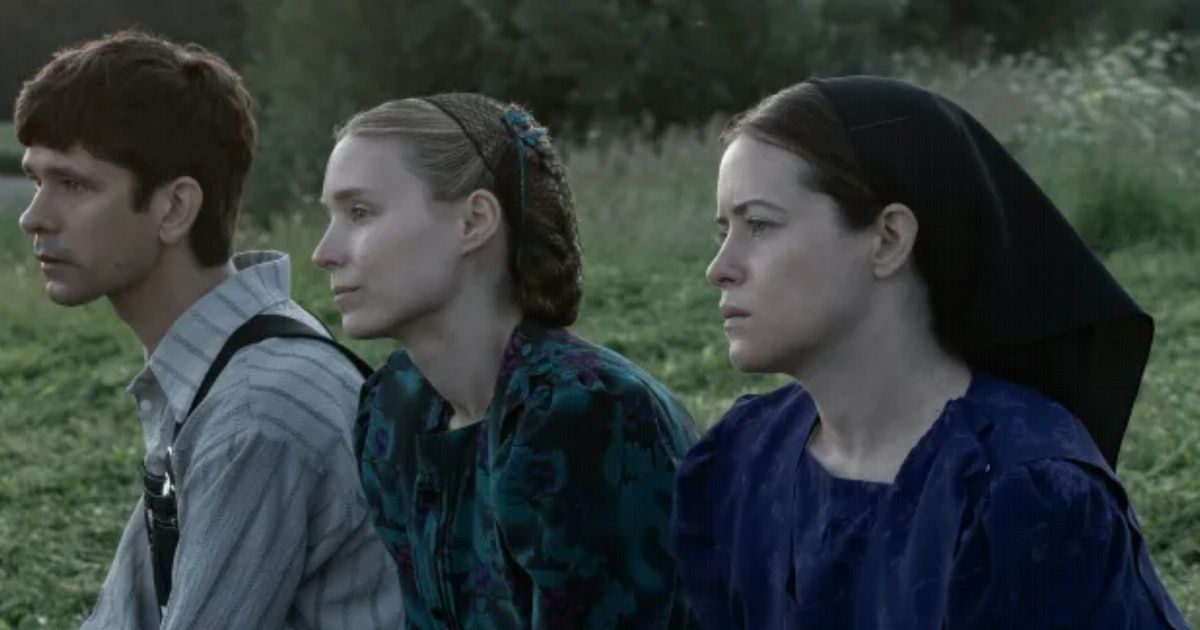
The character of Salome is the voice of truth, and the truth is a ladder that takes straight to justice. She clearly states: “I do not forgive them; I will never forgive them.” Because “we know that we have not imagined these attacks. We know that we are bruised and terrified, drugged, infected, and pregnant.”
Stating the facts, and staring the truth in the face, makes it easier to see that forgiveness of the abuser who has not even apologized, is an act of great injustice towards the sanctity and sacredness of the self. Rooney Mara’s character, Ona, who is pregnant as a result of the attack, is herself, the voice of reason and balance. She utters a key sentence that is worth hundreds of paragraphs, “We cannot forgive because we are forced to.”
Forgiveness is an act of mercy and mercy is never synonymous with weakness. How could it be fair to ask someone whose hand is forced for forgiveness? Not only will it not be sincere, but it will be asking the victim to be part of their own abuse. This dilemma makes it hard to equate forgiveness with establishing justice not only toward to abuser but toward the abused. To be fair with oneself as the victim entails prioritizing oneself over the perpetrator, which leaves no room for unwarranted and unsolicited forgiveness.
Forgiveness of Self
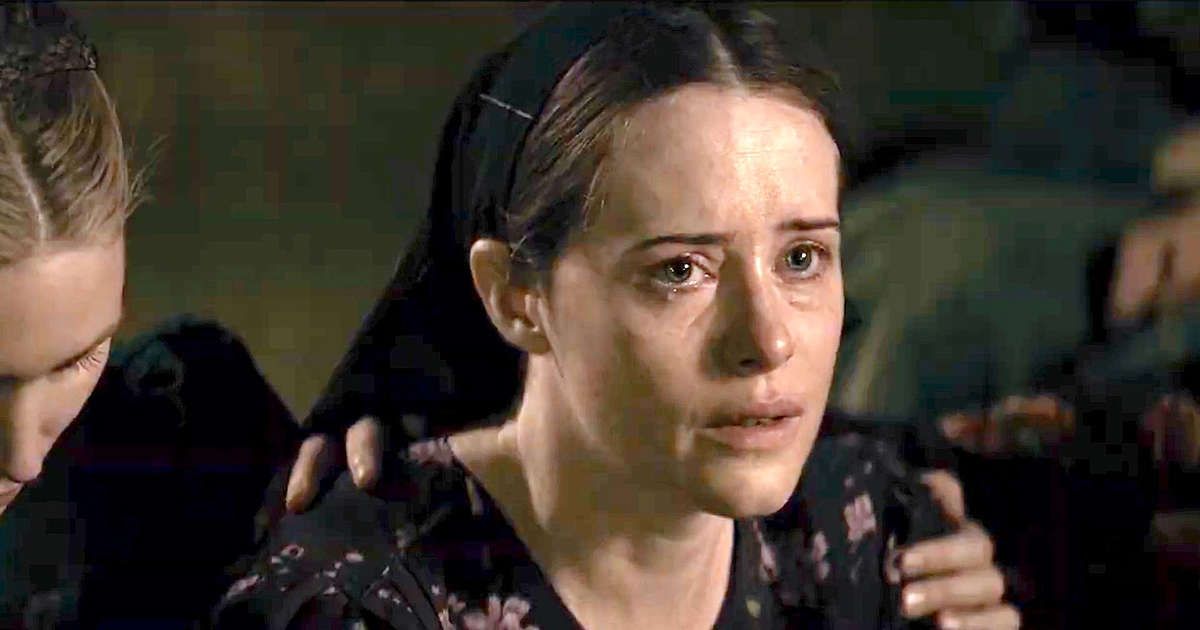
At the end of the debate, the women decide to leave. This act of leaving the religious community of Mennonites, and by consequence, leaving the abusers and the abuse behind, can be read as an act of forgiving oneself. There is usually a great deal of self-blame that tortures most victims of abuse. A few of them would consider it their fault. They can think they were not attentive enough or strong enough to avoid what had happened. Some of them think they could have fought more, hence the choice of staying and fighting.
However, leaving is an act of letting go: of the anger, of the hurt, of the blame, of the self-criticism, and of the whole negative experience. This is the moment in the whole entire movie, where we see those abused women take a real step toward their future in an act of self-forgiveness and self-love. By leaving, they prioritize themselves, take back control, and voice their utter refusal of the assault.
From a cinematic point of view, it was beautifully shot as a parallel to the exodus of the Jews, when they left Pharos’s Egypt behind and headed to their new beginning. Sometimes the best way to close a chapter is by leaving the place where the abuse and the hurt take place. This exodus is emblematic of the women’s final decision to direct their forgiveness towards themselves, as they deserve it the most.
Although some of the questions are answered, this movie leaves the audience with the unimaginably nuanced aspects of such notions as forgiveness. And at the end of the day, if religion says to forgive, but the heart says not to, then the final choice remains a perfectly personal one.