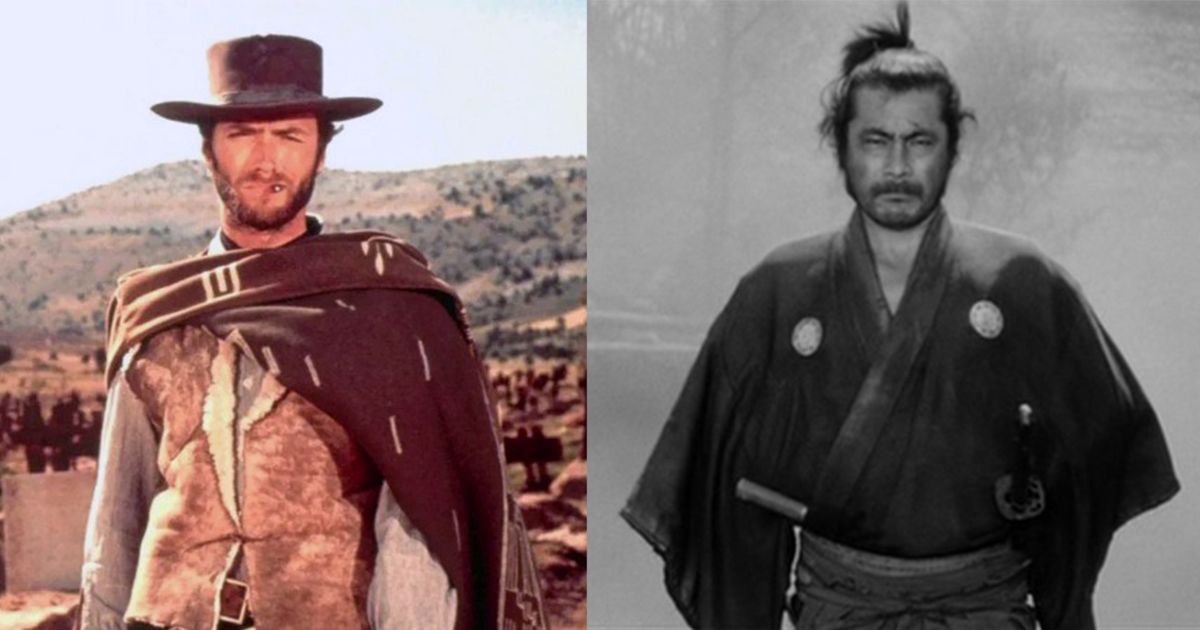
Dust settles along a dirt road in a deserted town, empty save for the gang set upon terrorizing its occupants. In its wake stands a figure. He’s calm, stoic. He surveys the street as a bell tolls the hour. Upon closer inspection, we see this figure is not Clint Eastwood or John Wayne… far from it. No, this is Toshiro Mifune, star of the 1961 Japanese movie Yojimbo.
How is Yojimbo a Western?
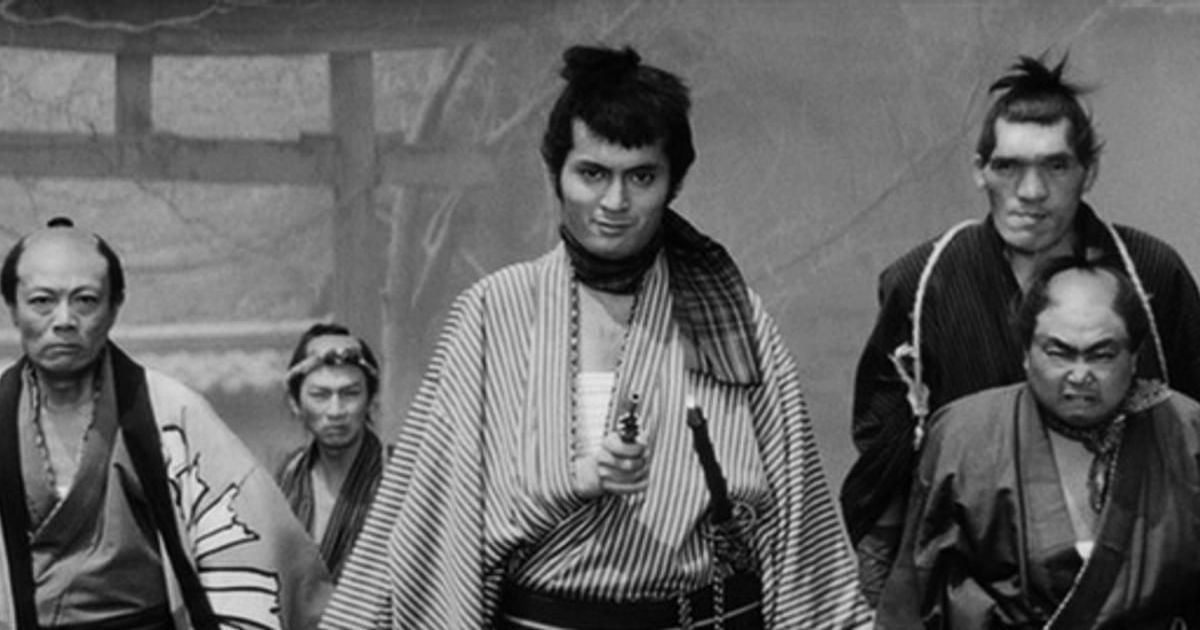
Watching Yojimbo feels exactly like watching an old-school Western, and with good reason. Take away the kimonos and katanas, and you’re left with a film about a stranger who rolls into town to save the day, or, in this case, from two rival factions. A wonderfully vile mix of action and humor, the shots in this film are nearly identical to modern Westerns, as are the timing, tone, and pacing of the sound effects. Surrounded by a sea of swords, there is one lone gun in the entire movie, wielded by Tatsuya Nakadai, who would go on to replace Mifune in later films.
The word Yojimbo translates to “Bodyguard,” and Mifune’s character, Sanjuro, lives up to his name as he plays the two rival gangs against each other in a battle of swords and wits. Although categorized as a Rōnin, this wandering samurai might also be based on folklore. According to D.P. Martinez’s Remaking Kurosawa: Translations and Permutations in Global Cinema, Sanjuro could easily be a stand-in for a marebito, a type of wandering spirit. Martinez wrote that they are “…Mysterious strangers who appear in a town or village and who must be treated carefully… they bring blessings if they are treated well… but can destroy a person or place if treated badly.”
The 10 Best Samurai Movies of All Time, Ranked
What Makes Yojimbo So Good?

The film’s legendary director Akira Kurosawa was inspired early on by the Westerns of John Ford (Ford’s The Man Who Shot Liberty Valance was released one year after Yojimbo). Kurosawa, who died 25 years ago this year, is perhaps better known for classics such as Rashomon and Seven Samurai, both of which also feature Mifune. Many of his films are Shakespearean stories reimagined in Feudal Japan.
Kurosawa would go on to write Yojimbo along with Ryûzô Kikushima. Basing the character of Sanjuro on his dislike of the Yakuza, Kurosawa himself said, “I was so fed up with the world of Yakuza. So in order to attack their evil and irrationality, and thoroughly mess them up, I brought in the super-samurai played by Mifune. He was himself an outsider, a kind of outlaw, which enabled him to act flexibly, if sometimes recklessly. Only such a samurai of the imagination much more powerful than a real samurai, could mess up these gangsters.”
What Westerns are Based on Yojimbo?
What is arguably less well known about Yojimbo, however, is the impact it has had on Western cinema.
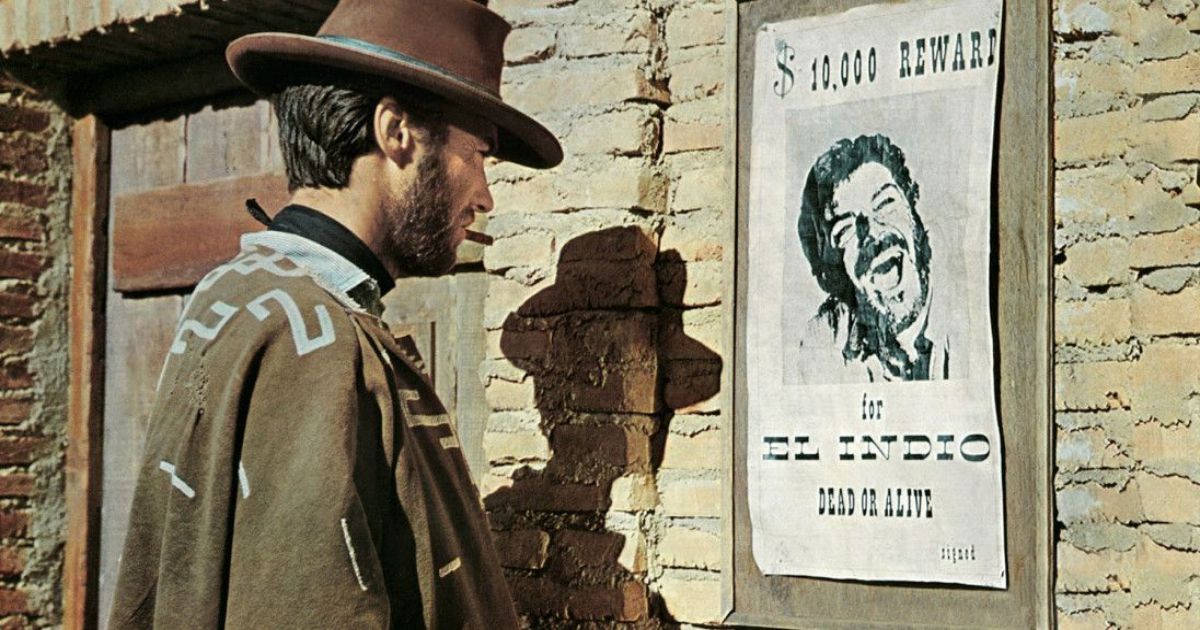
Yojimbo infamously came to inspire The Man With No Name Trilogy. Directed by Sergio Leone and featuring Clint Eastwood, this series, known also as the Dollars Trilogy, consists of A Fistful of Dollars, For a Few Dollars More, and The Good the Bad and the Ugly. Although billed as a Spaghetti Western (a derogatory term used to describe Westerns shot in Italy), all three were actually shot in Spain. The first iteration alone made nearly $20 million at the box office. Its sequel, For a Few Dollars More, fittingly made just that at over $25.9 million. The third in the series, The Good the Bad and the Ugly, would nearly double the revenue of the first, coming in at $38.9 million. In passing, Director Leone cited Yojimbo as an inspiration for the film, among other sources (including a pulp novel called Red Harvest).
Upon comparison, the similarities between A Fistful of Dollars and Yojimbo are vast. Both feature a wandering fighter—in Eastwood’s case, a gunslinger—who plays two rival factions against each other to accelerate peace for their own gain. Both main characters are confident and full of swagger (though admittedly Eastwood talks less). Both are virtually nameless, though this moniker is a bit of a misnomer. Eastwood’s character’s name is, in reality, ever-changing from film to film, from Joe to Manco to Blondie. Sanjuro, on the other hand, roughly translates to what is assumed to be the character’s age (30 years old). Therefore, Mifune’s character is also technically nameless. Both ride off into the sunset at the end, leaving a pile of bodies from both factions behind.
Why was Kurosawa So Important?
It should be noted that Kurosawa sued Leone’s production company for plagiarism after they initially tried and failed to secure the remake rights to his film. Although later settled, this would delay the release of A Fistful of Dollars. Before it was released overseas in 1964, Kurosawa would be able to direct a sequel to his beloved film, titled Sanjuro. Yojimbo itself would later get an official remake in the form of Last Man Standing. Directed by Walter Hill and featuring Bruce Willis and Christopher Walken, the film listed Yojimbo as inspiration in the credits. Both Kurosawa and Yojimbo have retained some serious fandom clout. Admirers include Francis Ford Coppola and George Lucas, who would later work with Kurosawa following a particularly lean period for the director.
In the end, Kurosawa’s Yojimbo both inspired and took inspiration from cinematic Westerns, accidentally creating a character and typology all its own in the process. Fans of the traditional Western should definitely give this unlikely film a watch.