

Welcome back to Full Coverage, my newsletter on all things beauty and wellness. Sign up here.
Did everyone see Doja Catâs new video for âGorgeousâ? It was easily the makeup ad of the year (and Maybelline just relaunched âMaybe Itâs Maybellineâ with Miley Cyrus). Yes, it was not really an ad. But with looks created by artist Sam Visser, a new class of supermodels, 1980s Tresemmé vibes and a sax solo, it was so fun.
A question for the group: With Bad Bunnyâs Superbowl half-time announcement, which lucky beauty brand is going to nab him to be the face of their fragrance label? Chanel has Timothée Chalamet, YSL has Austin Butler and Dior still has Johnny Depp. I imagine LâOréal is making moves; what do you think?
Some housekeeping notes: Iâm headed to Paris this weekend for a few BoF events, including a beauty and fashion breakfast on Tuesday at the Shangri-La Paris. My colleague Alice Gividen and I will be talking about all things luxury, so please email Alex.Rowe@businessoffashion.com, if you would like to join. And if you are in Paris and want to catch up, email me.
This week, Iâm back on the fragrance beat, with a close eye on Estée Lauder Companies. I also took a look at Coty (poor Covergirl), and am thinking about pruning, pruning, pruning.
Estée Lauder Companies Is All in on Fragrance (Who Isnât?)
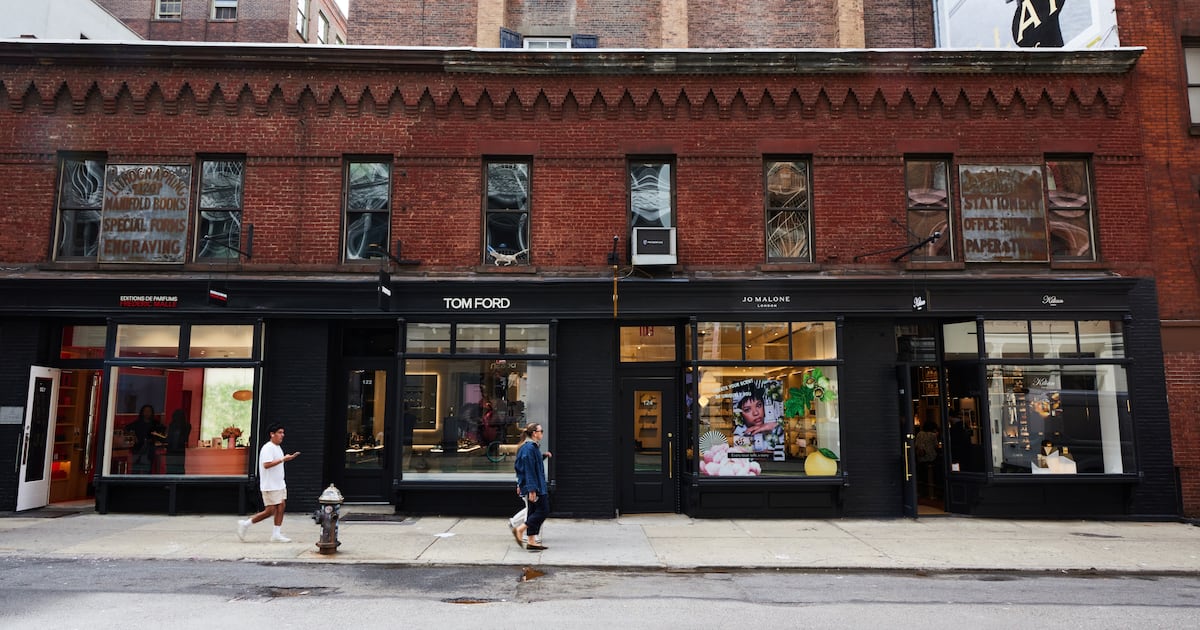
If you happen to be in New Yorkâs SoHo neighbourhood on Friday, you are likely going to be blocked off by barricades. Thatâs because a chunk of Prince Street will be closed while our friends over at the Estée Lauder Companies are pulling a page from luxuryâs fashion playbook for some world-building, all in the name of fragrance.
Just a few weeks ago, it sequentially opened stores right next to each other on Prince Street for some of its biggest fragrance brands, including Frédéric Malle, Kilian Paris, Jo Malone London and Tom Ford Beauty, creating its very own scent row. (Notably absent from the bunch is Le Labo, whose nearest store is on the other side of Broadway.)
Friday will mark a celebration of sorts â dinner, speeches by chief executive Stéphane de La Faverie and Americas president Tara Simon â to reiterate the businessâ commitment to the category. This push will crescendo later this month with the opening of Estée Lauder Companiesâ fragrance atelier, an in-house workshop for creatives, in Paris on Oct. 14. (More on that in a few weeks.)
The niche fragrance shopper is in SoHo. Puigâs Penhaligonâs sits directly across the street from Lauderâs grouping and La Beauté Louis Vuittonâs pop-up is just down Prince, as is Diptyque. Fairly close by on Mulberry is DS and Durga and on Elizabeth is Olfactory NYCâs flagship, near an outpost from Avestan, another smaller Lauder-owned scent label via Deciem.
Though not connected via walkway like Bernard Arnault is known to do with his LVMH properties, Lauder is making it easier for customers to pop in to its shops from store to store, though most wonât know (or care) that the four outposts are under the same ownership. Thatâs okay though. Clustering similar stores together is a proven way to draw shoppers. Marc Jacobs did the ultimate version of this in the late aughts with his West Village takeover (six stores within four blocks, though all but his bookstore have since closed).
On a recent afternoon, Kilian Paris felt like a bar welcoming guests for happy hour, and the crystalline bottles inspired by whisky tumblers helped with the vibes. I felt like I was walking into a poker game. Jo Malone seemed like it was gearing up for Christmastime, with associates offering layering suggestions and wrapping perfumes up in the brandâs signature cream-and-black boxes.
Kendal Ascher, senior vice president and general manager of La Mer and luxury brands, underscored the store teams, calling them perfectly âcastâ for each location. I was impressed, they really seemed to understand the brands: Tom Ford associates were routinely called âspecialists.â Dressed in all black and far more serious than the others I encountered, they were intent on âwardrobing.â A new Fucking Fabulous lipstick (yes, they extended the perfume) was precisely applied to my lips, but the berry color ultimately felt a little too much.
Simon told me the strip is the âtruest manifestationâ of its four brands, and another example of the business âbeing where customers are.â And she knows retail: Prior to her ascent at the company, she spent years in merchandising at Ulta Beauty, Sephora and Foleyâs.
Estée Lauderâs fragrance isnât huge, but itâs not small either. Itâs the third largest category at the company, after makeup and skincare, at roughly $2.5 billion (sales were flat year on year but up 2 percent for the quarter, thanks to Le Labo and Kilian Paris).
Everyone wants in on fragrance, currently beautyâs fastest-growing business. One executive recently compared it to the bottled water boom of the early 1990s.
Simon underscored that success in fragrance means driving core scents (i.e., Kilianâs Angelsâ Share or Tom Fordâs Black Orchid) with newness. Ascher said that flankers like Angelsâ Share On The Rocks were hits, but so were new scents like Jo Malone Londonâs Raspberry Ripple and Tom Fordâs Oud Voyager, which retails for $300 for a 50-ml bottle. According to the company, its luxury segment is seeing growth â âmid-single digitsâ annually over the last two fiscal years.
The new stores are, of course, a commercial play, but they are also a marketing vehicle. Jo Malone and Le Laboâs sales growth isnât only because the brands clearly understand their customers, but because they have more stores⦠40 of which opened globally in the last year.
A broader distribution of fragrance stores and a bigger marketing push will hopefully boost the business as Estée Lauder works out makeup and skincare.
The Death of the Great American Beauty Brand
For the last few months, rumours have swirled that Coty was hoping to offload some of its portfolio. On Tuesday the company confirmed it was reviewing its mass colour cosmetics business, including Covergirl and Max Factor, as well as its operations in Brazil, to make itself a fragrance company.
While people expect its portfolio to sell â it had a better shot selling its fragrances and licences to Interparfums â buyers arenât exactly going to be lining up to take these makeup businesses off Cotyâs hands
Shocking considering Covergirl is, well⦠Covergirl.
Founded in 1961, the brand was one of the first to offer that model-off-duty vibe to regular women. Who didnât want to look like Christie Brinkley or Cybill Shepherd in their prime â natural beauties, who first made no-makeup makeup a thing? And donât forget Rihanna, Drew Barrymore and Taylor Swift were all Covergirls.
Covergirl is hardly the first longtime American brand to stumble. Without the proper operational support or eventual buyer, a Revlon-type ending could be a worst-case scenario for the line.
How is it that brands that once defined American beauty are so irrelevant now?
Coty has struggled since acquiring a wild 43 brands from Procter & Gamble in 2015 for $12.5 billion. While the deal instantly made Coty the top perfume maker and third-largest makeup company in the world, it was a bad thing in the end. In 2020, Coty had to unwind part of that deal, selling off businesses to KKR it had no expertise in: hair care brands Wella Professionals and Clairol, along with nail line OPI.
Now, Covergirl and other mass colour properties are on the chopping block. Is there a PE firm confident enough that it can turn these brands around and justify the multi-billion-dollar price Cotyâs likely asking? One of the few experiments along these lines â Adventâs Orveon, which owns Shiseidoâs divested makeup brands Laura Mercier, Bareminerals and Buxom â doesnât inspire much confidence.
It sounds easy to take Gen Zâs love of nostalgia and make Covergirl special. But itâs not. Covergirlâs recent campaign starring Niki Taylor, a face of the brand in its heyday, came and went.
The problem here is that Coty thought mass brands like Covergirl were too big to fail. In a market constantly flooded with newer, nicher brands, the reality is that they may be too big to succeed.
Makeupâs Fall From Grace

The M&A backlog doesnât help this situation much, for Coty or anyone else.
According to several high-level insiders and bankers, one holdup preventing the logjam of deals from bursting is that big conglomerates are in the midst of long strategic review processes, temporarily holding a slew of brands off the market.
I get that businesses need to sharpen their positioning in a slowdown, but is anyone going to be a makeup company anymore?
At ELC, insiders tell me Smashbox (as well as Glamglow) will likely be the first of many brands to be sold; it should get rid of Origins but there are emotional ties there, as it was started by William Lauder. Unilever Prestige still hasnât figured out its plans for its lines including Kate Somerville (Iâm hearing itâs very close to closure; Unilever did not respond to requests for comment), and Japanese conglomerate Kao needs to shed a chunk of its nearly 30 brands. Maesa is out of the colour business completely after closing Drew Barrymoreâs Flower.
Businesses got burned in 2018 with billion-dollar valuations and lines like Anastasia Beverly Hills and Kylie Cosmetics, and the segment is complicated with costly, never-ending launches. BUT colour is beautyâs biggest category.
And there really isnât a beauty business without makeup.
Thatâs it for now; thanks for reading Full Coverage.
Priya
Editorâs Note: This article was amended on Oct. 3, 2025, to clarify Estée Lauder Companies’ luxury segment’s growth.

