

Hi all, and welcome back to Full Coverage.
Iâve been in the throes of Halloween for at least three weeks now. Even though trick or treating doesnât officially kick off until Friday, my boys have already been to four Halloween gatherings and I am now living with a Batman and a lion (and sometimes a pumpkin and a candy corn).
Iâve been surprised, though, that my inbox hasnât been inundated with spooky makeup pitches or âWicked 2â collabs. The beauty industry loves a fake holiday, i.e., National Lipstick Day, so Iâm not sure why brands arenât going after a real one.
Speaking of marketing promos, I watched most of âNobody Wants Thisâ season two â itâs not as good as season one but I like it. I, like some other eagle-eyed viewers, noticed an extended shot of Joanne (Kristen Bell) slathering on Estée Lauderâs Advanced Night Repair while FaceTiming with her sister Morgan (Justine Lupe). It was strange, and not just because she was putting it on after her makeup.
Joanne, who is loosely based on co-creator Erin Foster, has one of the best cool-girl wardrobes on television and is supposed to be in her mid- to late 30s. Why is she wearing Advanced Night Repair? Because the Lauder product is a hero? Because Bell is its latest face? And because companies think everyone loves product placement? These are all reasons, sure, but if youâre going to do this, do it right. Advanced Night Repair is for Joanneâs mom. Joanne either uses the same Cerave sheâs had since high school or has a shelf of expensive moisturisers she canât commit to.
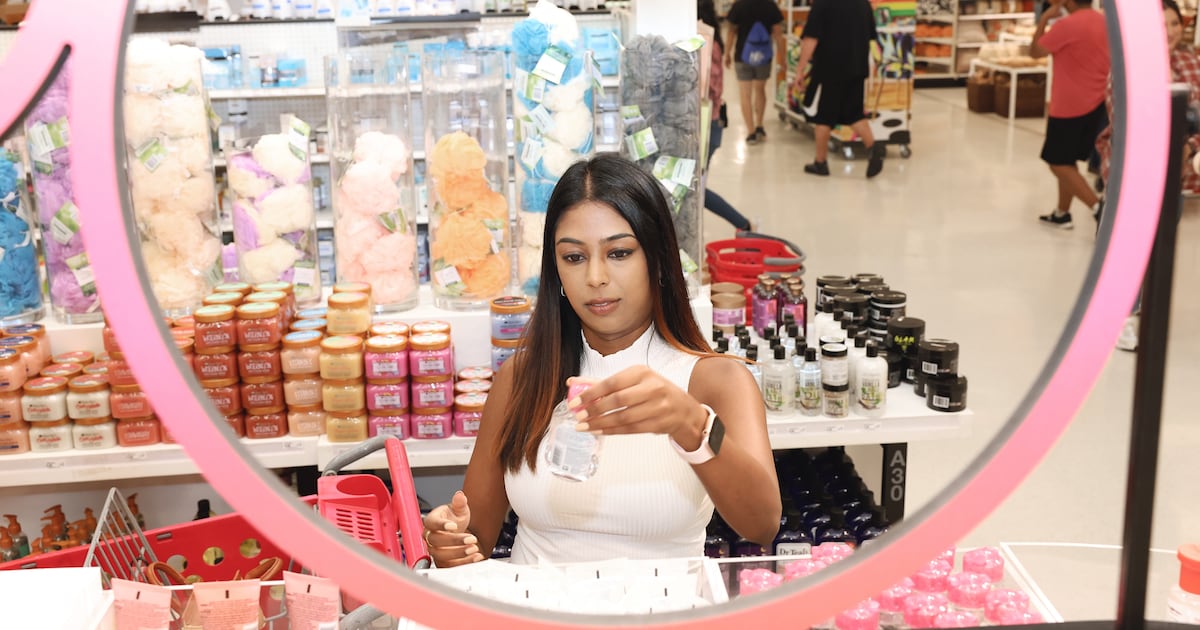
Onto todayâs main topic: Target beauty and wellness.
How Target Missed the Beauty Mark
A chill has descended on Minneapolisâ Nicollet Mall â and I donât mean a cold front.
Just as last Thursdayâs edition of Full Coverage went live, I got word from a source that Target, home to many Minneapolitans (I know this word because my husband is from there), was about to announce layoffs. Hours later, the company said it was cutting 1,800 roles in its corporate headquarters. But that wasnât the worst of it: Teams were told to work remotely this week and affected employees werenât told of their status until Tuesday.
Itâs been a challenging time at the retailer, with its stock price tumbling about 30 percent in the last year; eight months of falling foot traffic, according to Placer.ai; an ongoing backlash due to its walkback from DEI initiatives, the disintegration of its partnership with Ulta Beauty and a muted Wall Street reaction to Michael Fiddelkeâs appointment as chief executive in August.
Heading into the holiday, every retailer wants big wins, but Targetâs have to be seismic to get beauty back on track. The layoffs will make that harder, by winnowing down management ranks, with those higher up primarily managing people rather than categories. One veteran executive who was senior divisional merchandise manager for beauty, has moved into home and pets, for example.
Target declined to comment on individual movements, but said, âThe changes are across the enterprise and not about specific departments.â
Diversity, Equity and Exclusion?
Many of Targetâs troubles start with its DEI about-face. Because of the retailerâs historic pro-DEI, -LGBTQ+ and feminist stances, itâs been whiplash for beauty brands stocked at the retailer, which tend to be pretty progressive.
Brand founders told me that since January they canât promote Target in social media or marketing because of the blowback they would receive from their own communities. Theyâre forced to point to Amazon, Ulta Beauty or Walmart, ultimately irritating Target merchants. But founders and vendors say they worry more about irritating their customers.
âI canât sacrifice my community,â said Melissa Butler, founder of The Lip Bar. She has seen sales of her Black-owned makeup line fall 30 percent at Target since January. Butler said she has no reason to believe those sales are coming back. Target was once her biggest retail partner.
In the Details
Because Target canât win on price (Walmart) or convenience (Amazon), it has to win on product.
While it was fashion and design that made Target âTarzhay,â its beauty and wellness division was also excellent at incubation and discovery. It was one of the first retailers to make the stylist the star again with Kristen Ess Hair. It introduced a âcleanâ standard with skincare brands like Versed and Cocokind, and Odele in hair. When clean skincare was falling out of favour, Naturium became the star with strong formulas focused on efficacy. It took a chance with Starface, embracing acneâs fun side, and went for elevated body care with Saltair, in partnership with Iskra Lawrence and The Center.
Today, Target stocks a host of indie heavy hitters, including Byoma, Vacation, Prequel, Frenshe and Fineâry, and big national brands like Pantene and Cerave. But it doesnât seem to be enough anymore.
Some insiders blame Targetâs tough terms. One founder who said they were deciding between Sephora and Target believed the line would get two years to prove itself at the former and only six months at Target. Another said the retailer is pushing for exclusives from its best young brands, which are unwilling to commit given Targetâs outlook.
Thereâs a clear risk in assortment. One executive told me Targetâs âsimply to amplifyâ strategy on inventory, which highlights bestsellers and limits product on shelf, has wreaked havoc in beauty. âYou might be able to predict how people buy and how often in detergent, but itâs not the same in beauty,â they said. âWe continue to deal with sellouts.â
Top-down initiatives change early and often. Target likes to move its merchants around so they have experience in various areas of the business. Many observers credit Kevin Wong, vice president of merchandising for beauty, for chasing new brands and virality, and Ryan Beach, vice president of merchandising for health and wellness for growing vitamins, minerals and supplements with smart DTC brands. But with new merchants coming in, who want to put their stamp on the category, consistency is tough and brands have to pivot from initiative to initiative quickly.
How brands are presented is another issue. Butler said displays, which Target sets only once a year â as opposed to quarterly or monthly refreshes â donât enable the retailer to have a changing editorial point of view or bring in lines fast enough. Adding a âseen on Tiktokâ shelf wonât cut it. I think of the line Fazit, the freckle sticker brand worn by Taylor Swift. She first wore the brand in October 2024; the line landed at Target in March 2025, well past its initial viral moment.
Target has made some changes to enable discovery: The front of stores called Bullseye Playground, which feature under-$5 buys, have been loaded up with beauty items since the summer.
Amanda Nusz, Targetâs senior vice president of merchandising of essentials and beauty, told me the âearly results of adding beauty to those spaces has been really encouragingâ in a call prior to the layoffs. She continued, âWe all know beauty is very high impulse; guests love to discover something new, something fun.â
The Next Bullseye?
Targetâs beauty business is still big, and has nearly doubled since 2019, with hair, body and skin performing particularly well, said Nusz. But net sales are flat for the year, according to the companyâs latest earnings announced in August.
If Target isnât getting new shoppers to store (or old ones it lost back), the retailer needs to work double time when customers are there.
Which brings me to the Ulta Beauty areas of stores that Target is winding down. Nusz stayed firm that the company is committed to the partnership through its August 2026 end, but there will eventually be a hole to fill. Target needs to get serious about what that space is going to be next.
Taking a page from Sephoraâs âNext Best Thingâ display is probably the smartest strategy to highlight its best beauty and wellness brands, complete with testers, AI capabilities and smart marketing campaigns with big ideas.
It may not be senior leadershipâs top priority, but beauty should be high up there. People donât go to Target for groceries, and are going for diapers and garbage bags less and less. So why not do what beauty can do best â surprise shoppers⦠and delight them?
What Iâm Reading

Anna Wintourâs coral-toned makeup look at Vogue World was courtesy of Summer Fridays, her makeup artist Amy Oresman said. (Instagram)
Every line is pushing the limits of price. The Cutâs perfume columnist April Long finds out if Bottega Venetaâs second $490 fragrance collection is worth the spritz. (The Cut)
Jennifer Lawrence got candid with The New Yorker about cosmetic procedures, including a potential boob job. âEverything bounced back, pretty much, after the first one,â she said, about her body after having her first child. âSecond one, nothing bounced back.â (The New Yorker)
Wellness spaces are hoping to become the next big members club boom with saunas, sound baths and fitness classes. For a younger generation thatâs abstaining from pretty much everything, they have a good shot. (The Business of Beauty)
Tech bros are also going under the knife amid anxiety about âaging outâ of the workforce. Inquiries about face, neck and eyelid lifts from men have quintupled since 2020. (The Wall Street Journal)
While the appetite for facelifts is getting bigger, the preference for boob size is getting smaller. Another signal that skinny is back in? (The Washington Post)
Itâs been a month of huge shakeups in beauty, but the rumours that LVMH might be selling its stake in Fenty really cut through. Itâs pretty much a death sentence for the Fenty incubator Kendo â and maybe the beauty incubator concept at large? (The Business of Beauty)
Instead of booking one of Sephoraâs popular tween parties for her niece Sophieâs Bat Mitzvah, wedding planner Mindy Weiss built her a store of her own. For one night only, âSophoraâ contained a light-up dance floor and beauty stations, and was packed with goodies from brands like Kylie, Glossier and, of course, Rhode. (Instagram)
Next week, Iâll be in LA â just in time to miss Vogue World. Maybe Iâll see you there?
Priya

