

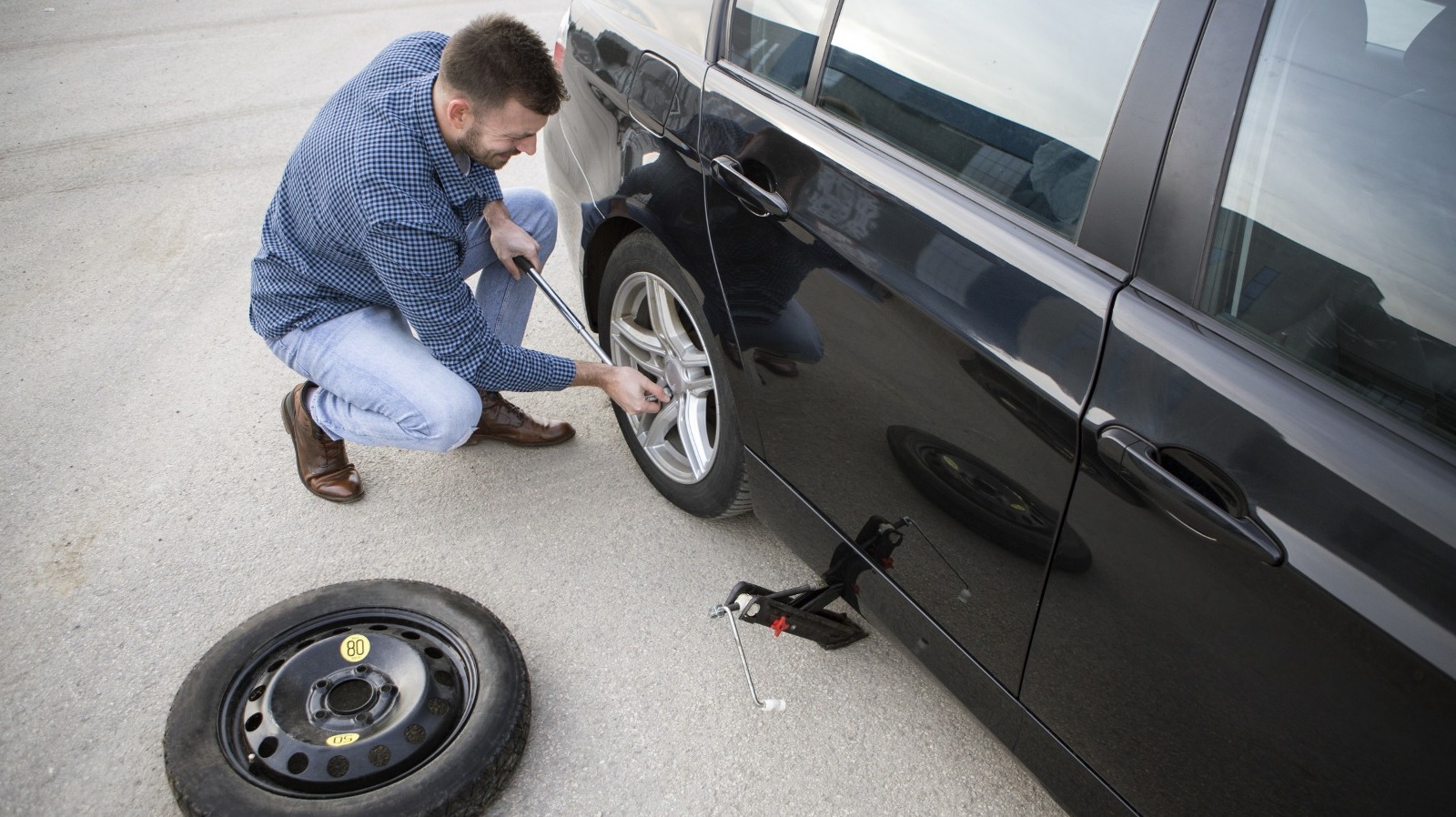
Surprisingly, the main reason for the limit isn’t the risk of popping. Of course, spares are more susceptible to wear and tear than standard tires, and they can pop on the way to the shop. You’ll have to drive slowly and carefully to avoid getting another flat. More important, however, is the damage that driving on a spare inflicts on your car.
Because most spares are shaped differently than the rest of the tires, they spin at a different rate. This rotational difference can strain the transmission, and you’ll likely notice a loss of handling and traction (another reason to drive slowly). Even a minor difference in tread patterns can damage the differential, as the imbalance of torque heats up the drive line with each passing yard traveled. Driving on a spare won’t destroy your car, but it might reduce how long your transmission will probably last.

