

Everyone says it because it’s true: The kitchen is the heart — and the focal point — of your home. There are so many tiny elements that make it unique and personal, from your collection of mugs to the tiles you choose for the backsplash. But the biggest, and often most important, aesthetic choices in the kitchen come down to the countertops and cabinets you have.
The thing about kitchen cabinets and countertops is that trends seem to come and go so quickly. For instance, the all-white kitchen was all the rage just a few years ago, but now it’s one many interior designers are tired of seeing. “That clean, flat, minimal counter with no veining or movement feels a bit sterile now,” Brad Thorton, founder of Thorton Projects, says. “People want variation, something that feels natural and specific to them and their family.”
And that’s not the only look that feels so last year. Here are seven kitchen cabinet and countertop trends designers are over, and what’s replacing them.
7 Kitchen Cabinet and Countertop Trends That Are on Their Way Out in 2026
Credit: Aspects and Angles/Shutterstock
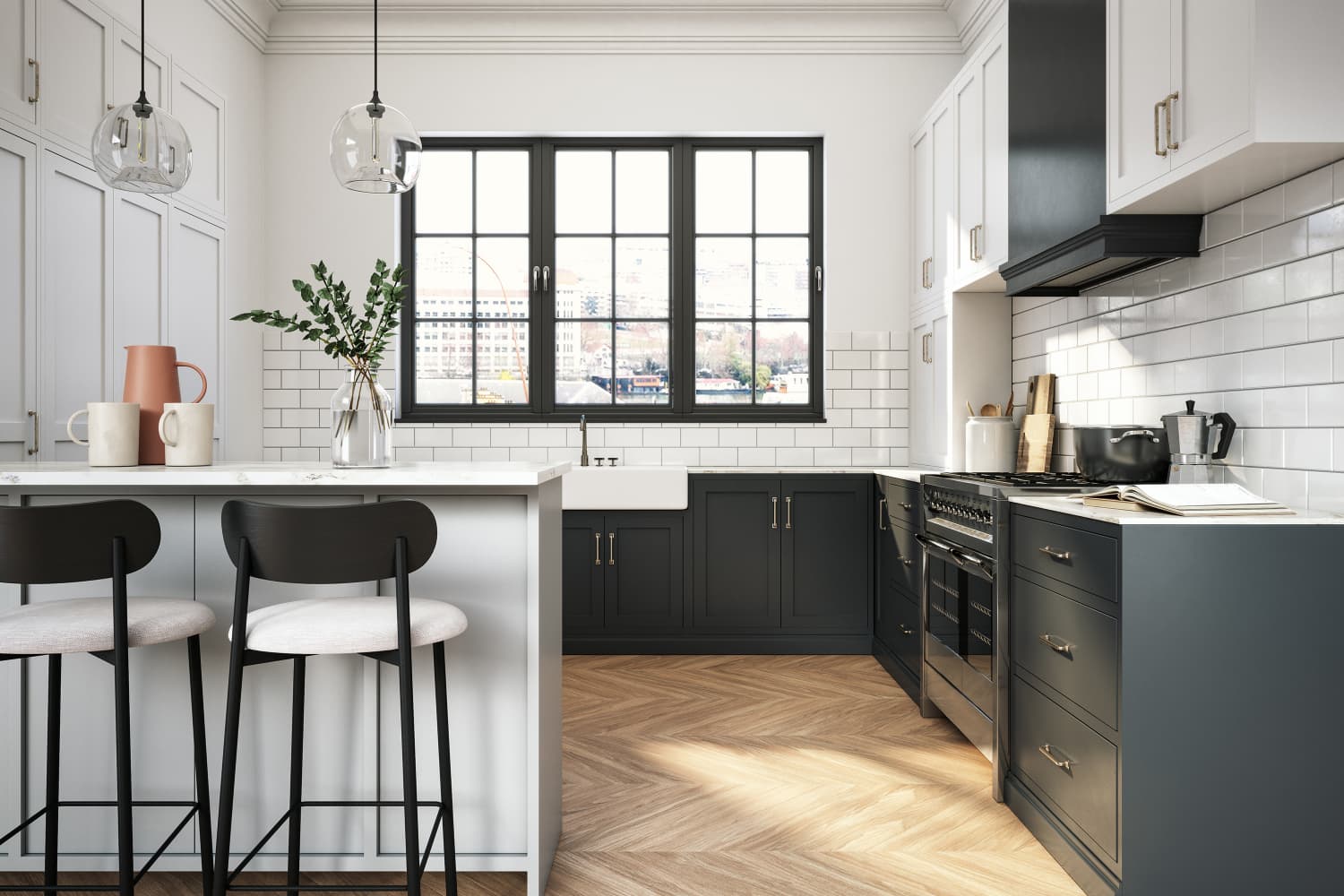
1. High-Contrast Black-and-White Cabinets and Countertops
High-contrast black-and-white cabinets and countertops create a visual balance in a kitchen, but their popularity is slowly dwindling. “While timeless, it’s starting to feel a bit sterile to homeowners who crave warmth and personality,” Rebekah Murphy, co-founder and architect of design at Murphy & Moore Designs, says. “This once felt modern but now reads as harsh. Today’s clients are drawn to spaces with more depth and story. This trend is shifting towards tactile finishes, layered neutrals, and cabinetry that feels crafted and lived-in rather than showroom perfect.”
Instead of high-contrast black-and-white kitchens, Murphy sees tonal layering growing in popularity. This may look like “cabinetry painted in warm neutrals, soft clay, putty, and muted greens or blues.”
Credit: John Keeble / Getty Images
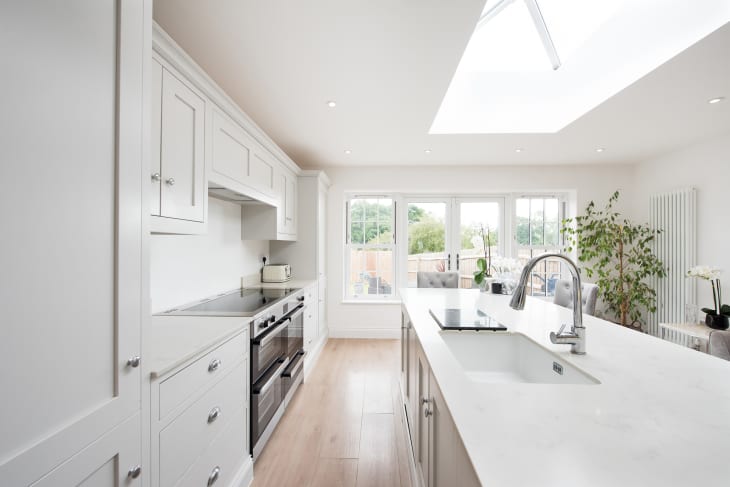
2. Stark White Quartz Countertops
White quartz countertops are low-maintenance, stain-resistant, and very versatile, which makes them easy to match various aesthetics in the kitchen. But they aren’t the most popular choice at the moment with homeowners who are trying new ways to liven up their kitchens; an all-white kitchen can come off as uninviting and lacking character. “Of course white is a classic and still has a place, but now it’s about layering it with texture, mixing in more warmth so it feels intentional and less spec-house,” Thorton says.
People are opting for materials that age gracefully and even show subtle variation as time passes. So instead of white quartz countertops, Murphy sees an increase of interest in a slightly different direction. People are going with “surfaces with gentle veining or texture create a more organic and inviting look in the kitchen,” she explains.
Credit: Victoriia Kovalchuk / Getty Images
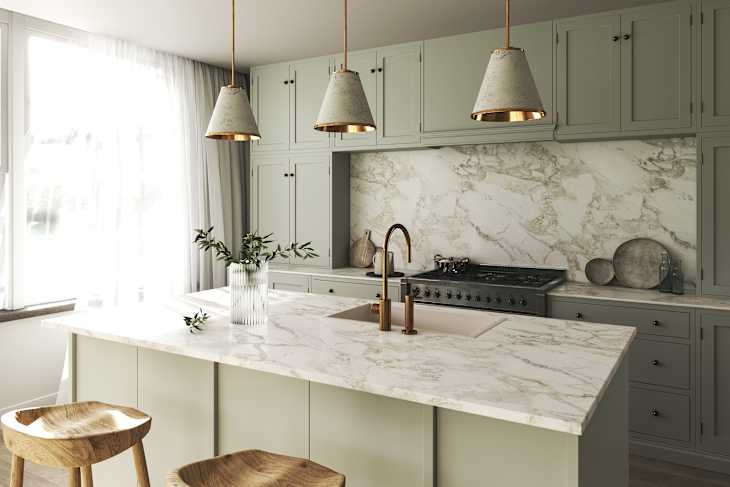
3. White Marble Countertops
The same goes for all-white marble countertops, but Thorton has found that homeowners are less keen on the staining and imperfections in the stone that high-traffic zones produce. “They’re more realistic about maintenance and looking for durable solutions that can still give that character but don’t make you nervous to live your life,” he says.
Those who love the look of marble countertops are gravitating towards bold, expressive slabs. “Think: marbles with dramatic veining in bolder colors,” Thornton says. The darker background featuring black or deep gray and mineral-rich lines create unique patterns that will give your space character.
Color is also something people are beginning to use more confidently instead of white marble in the kitchen. “Chocolate browns will be around for some time, along with other textured green, terracotta, or wine tones grounded in neutrals so it doesn’t feel too ‘of a time,’” Thorton says. “The idea is that the kitchen can have mood and personality, not just function.”
Credit: Pixel-Shot/Shutterstock
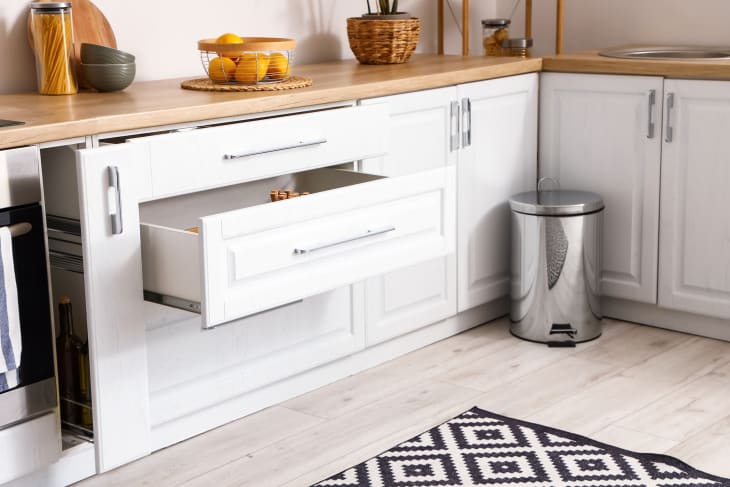
6. “Builder-Standard” Cabinets
Plain, non-architecturally detailed cabinets that are very stark white (also known as “builder standard”) are often found in new homes. They’re mass-produced and used for efficiency, and while they’re great for the building stage and are budget-friendly, when the homeowner moves in they may feel like the kitchen is missing personality. “They lack any kind of design appeal. At the bare minimum, adding wood trim and painting a soft cream can make a ton of difference,” Brittny Button, founder and principal designer of Button Atelier, says.
She also suggests trying to choose cabinets that have a classic door design coupled with intriguing hardware to help amp up the overall look. “At the moment, I’m enthralled with clear glass cabinets, especially for upper cupboards, as it reminds me of a U.K. castle look. Extra points if the internal door design has an arch to it!”
