

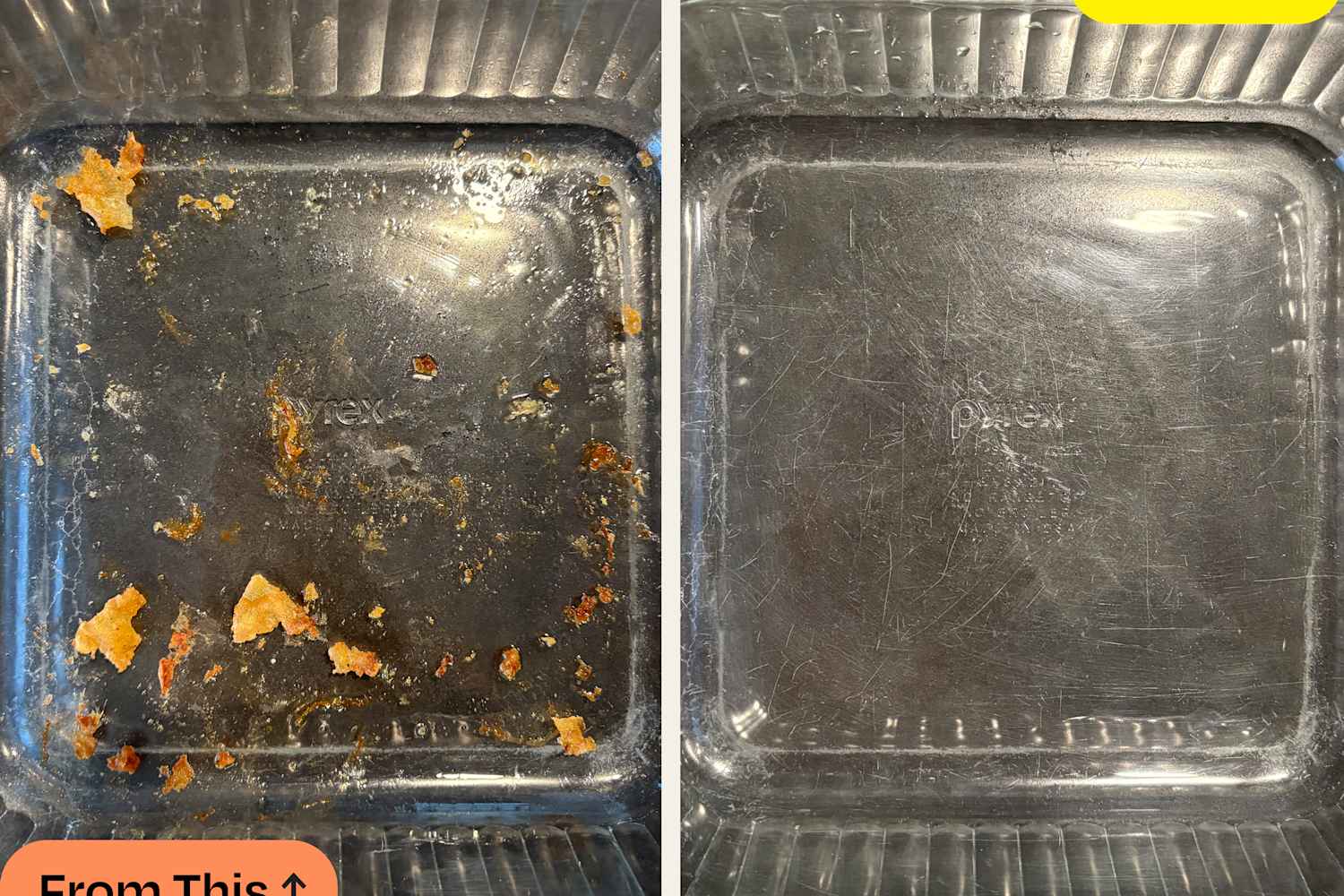
We’re knee-deep in casserole season here in the Midwest, which means you can find glass bakeware soaking in just about every sink on the block. A nice bath in warm, soapy water helps loosen baked-on foods and grease, but no matter how long you let it sit, there almost always seems to be a certain amount of gunk that just won’t budge. Or so I thought!
If you’re looking for the easiest way to clean greasy glass baking dishes without scratching them (or spraining your wrist), you’re in luck. I put five popular methods to the test to see which one was the best at removing grease stains on my crustiest glass casserole dishes — you won’t believe the winner.
How I Tested the Methods for Cleaning Greasy Glass Baking Dishes
To start, I did some research on the most popular, most-beloved tricks for cleaning grease off of baking dishes. Once I picked the five methods, I dirtied up five glass baking dishes. I filled them with some cream of mushroom soup and baked them until I had a mess on my hands, especially around the harder-to-clean sides and edges. Then, I got to cleaning.
The ratings: Each method received a rating from 1 to 5; a 1 was given to the least effective method, and a 5 went to the most effective. Along with the rating, you’ll find notes on how easy or difficult each method was, how much I liked or disliked it overall, and how much time it took to do its thing.
Glass Baking Dish Cleaning Method: Dish Soap & Water
The method: Take a warm, wet sponge to the stains with a few drops of dish soap. If stains persist, use a mild abrasive such as baking soda to lightly scrub.
How it went: This process took so long, I finally gave up because my fingers were starting to hurt from all the intense scrubbing. (I love Dawn for all sorts of grease-removing projects — just not this one, it turns out. The stains just wouldn’t budge… not even in the slightest! The sponge was too soft; even when I added baking soda, it just couldn’t get any traction to chip away at the stains. There was zero improvement in the way of stains, but the other parts of the dish did get very shiny!
Glass Baking Dish Cleaning Method: Bar Keepers Friend
The method: Sprinkle Bar Keepers Friend on the stains, then scrub with a damp sponge and rinse.
How it went: It took a little while, but I started seeing results within about a minute or so of intense scrubbing. Once again, the sponge was pretty useless, but the active ingredient in Bar Keepers Friend (oxalic acid) is just a bit more abrasive than baking soda, so with some major elbow grease, I was able to get about half of the stains off. I also tried making a paste with Bar Keepers Friend and water — which works wonders on greasy metal cookware — and then let it sit on the stains for a few minutes, and it seemed to come off a bit easier.
Glass Baking Dish Cleaning Method: Toothpaste
The method: Apply toothpaste to the stained area, scrub with a toothbrush, and rinse well with soap and water.
How it went: First, things got messy (and minty!), but then the stains started lifting. It was nice to have the toothbrush to hold onto while scrubbing the difficult-to-reach areas. I wasn’t able to get all of the stains off, but was very impressed with the progress I did make. The dish definitely smelled like mint afterwards, so it’s important to thoroughly clean the dish before cooking with it.
Glass Baking Dish Cleaning Method: Magic Eraser
The method: Soak the dish in warm water, then scrub the stained areas with a Mr. Clean Magic Eraser. Then, rinse well with soap and water.
How it went: Magic Erasers are dense, so I had to really push down when I went over the baked-on stains. (I ended up using my thumbnail to press down, but I’m happy to report that it worked really well.) I started seeing incredible results within a few seconds of vigorous scrubbing — I will 10/10 do this method again and I was ready to call it the winner until I tried the final method (but more on that below!). I was a little hesitant to use the Magic Eraser on my baking dish, because I try to only use it on things that won’t come into contact with food, but the brand says it’s totally safe to use the Magic Eraser on pots and pans, and even recommends it (as long as it’s not nonstick, as the sponge can ruin the finish).
Glass Baking Dish Cleaning Method: Cornstarch & Vinegar
How it went: I wasn’t too sure what was going to happen with this all-natural homemade cleaner, but a few seconds into scrubbing it was apparent that this was definitely a winning combination. Cornstarch and vinegar are pretty much always great for stain removal, but I think the real magic here was the Dawn polymesh scrubber I used. The solution helped, but when I tried it with a damp sponge it wasn’t nearly as effective.
A Note on the Real Winning Glass Baking Dish Cleaner
While most of the methods I tested worked on some level, it was made clear that what I used to scrub the dish with was just as important as the solution I used to clean it. Just for kicks, I tried using my trusty scouring pad with nothing more than water and lots of elbow grease — and it was more effective than all the other methods aside from the Magic Eraser. It was a lot of effort, though: I call this method “rage scrubbing” and save it for an evening when I need to let off some steam. But truth be told, I might recommend this method over all the others! TL;DR: If you’ve got a quality scrubber, it matters less what cleanser is on the dish itself.
How do you clean greasy glass baking dishes? Let us know in the comments below!
