

Star Trek episodes getting banned is very on-brand. The sci-fi TV franchise has been known for challenging conventions of race, gender, and war through its allegorical adventures, and for TV to be that daring in the 1960s was as controversial as it was trailblazing for Paramount.
While some episodes of the franchise were edited to be more TV-friendly, several were removed from broadcast entirely. Sometimes it was due to the shows being too violent, and other times it was due to sexuality. These Star Trek episodes are iconic, even if someone wanted them banned for one reason or another.
“The High Ground”
‘Star Trek: The Next Generation’ Season 2, Episode 12
On the surface, there doesn’t seem to be anything all that controversial about “The High Ground.” It’s a familiar scenario for Star Trek: The Next Generation, involving an alien civil war and a crew member held hostage. During this episode, Data cites some Earth history and mentions the fictional 2024 Irish reunification, a very touchy subject for the UK.
For mentioning Ireland’s independence, “The High Ground” was banned in the UK and the Republic of Ireland. As the BBC reported, the episode was poorly timed, given that the Troubles were still ongoing in Northern Ireland. Eventually, the episode would air in the UK during the 2000s.
“The Empath”
‘Star Trek: The Original Series’ Season 3, Episode 12

There was torture aplenty in the episode “The Empath,” from the original Star Trek series. While rescuing a science team from a doomed planet, the Enterprise crew is imprisoned and subjected to horrific experiments. Also captured is the strange woman Gem, who can absorb pain. It’s an ability that will come in handy for the horrors that the captured crew will endure.
While “The Empath” still has a compelling moral lesson about understanding vulnerabilities, the violence might’ve been too much for some to see that story. The disturbing nature of the crew being tortured was enough to garner a BBC ban. It’s a shame British audiences wouldn’t get to see the Star Trek episode until 1994. The episode is certainly a highlight of season three, thanks to its striking sets, clever writing, and powerful performances.
“Patterns of Force”
‘Star Trek: The Original Series’ Season 2, Episode 21

The Enterprise crew tackled Nazis in this provocative episode of Star Trek: The Original Series. The planet Ekos turns out to be infested with swastikas and Nazi slogans. A missing historian might be responsible for this influence, leading Kirk and crew on a dangerous adventure through fascist territory.
For the controversial choice of featuring Nazis, “Patterns of Force” was banned in Germany. The country was touchy about the depictions of Nazis on television and wasn’t cool with an episode featuring Nazi garb and language, despite being critical of that movement. The episode would later air in Germany during the mid-1990s.
“Whom Gods Destroy”
‘Star Trek: The Original Series’ Season 3, Episode 14

The original Star Trek series didn’t shy away from sexuality, and “Whom Gods Destroy” is a perfect example. A delivery mission of medical supplies to an asylum goes awry when Kirk and Spock are targeted by the shapeshifting Garth. Part of the plan involves the seductive Orion patient Marta attempting to delight Kirk before assassinating him.
Marta’s sexy dance in the Star Trek episode was considered too risqué for the BBC. The British broadcaster refused to air “Whom Gods Destroy,” fearing it’d be too sexy for the kids who would be watching. The plot involving sadism also played a role in the ban, as British TV audiences wouldn’t discover Marta’s allure until the 1990s, when the ban was lifted.
“Miri”
‘Star Trek: The Original Series’ Season 1, Episode 8

Before there was Children of the Corn, there was the Star Trek episode “Miri.” Venturing to a 1960s-style planet, the Enterprise crew discovers that only the children remain. The kids are immune to a plague that has wiped out all the adults and threatens to do the same to the starship crew.
“Miri” was wrapped up in the BBC’s big banning of Star Trek episodes, with the most likely reason being the depiction of disease. The episode would air once on British television but was removed due to complaints yet to be revealed. But with a kid audience in mind, the thought of children living on their own when their parents were the victims of a plague might’ve been too much.
“Conspiracy”
‘Star Trek: The Next Generation’ Season 1, Episode 25

“Conspiracy” is the Next Generation episode with an exploding head, which was the gruesome climax of the episode involving a parasitic alien aboard the Starship Enterprise. The story revolved around senior Starfleet officers suspected of being under the control of alien parasites, and it reveals these nasty creatures in graphic detail as they worm in and out of human bodies.
“Conspiracy” is one of the most brutal episodes of The Next Generation for all its gory details, earning a ban in the United Kingdom. When Picard and Riker fire their phasers at the infested Remmick, he doesn’t jolt and expire. The skin melts off his face before it explodes like a piece of fruit, exploding the massive parasite within him. This was the first season of The Next Generation, where the show was still finding its footing. For a moment, it stepped into David Cronenberg territory.
“Plato’s Stepchildren”
‘Star Trek: The Original Series’ Season 3, Episode 10

On the surface, “Plato’s Stepchildren” seemed like another wacky adventure into a familiar alien culture. The Platonians are all about Greek culture, from the philosophy to the wardrobe. An encounter with this species leads to the Enterprise crew being captured by the Greek-inspired beings with telekinetic powers.
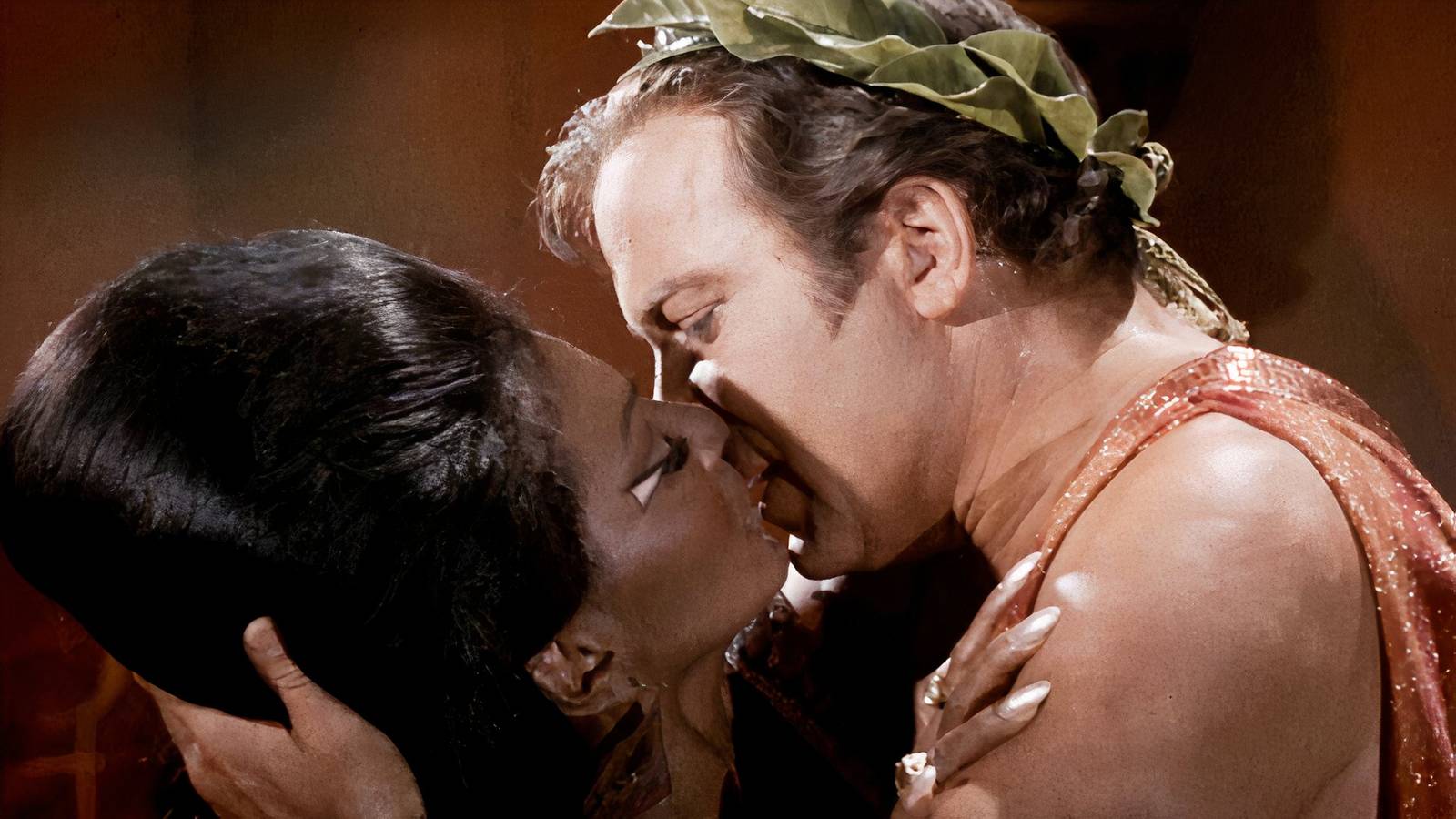
“Plato’s Stepchildren” is considered historic for featuring an interracial kiss between Captain Kirk and Communications Officer Uhura, as noted on History.com. However, the romantic moment was not what led to this Star Trek episode being banned in the UK. The BBC stated their reasoning for banning the episode was due to the depictions of torture and sadism. While there is some torture and violence in the episode, it’s hard not to see the kiss playing some role in the decision.

