

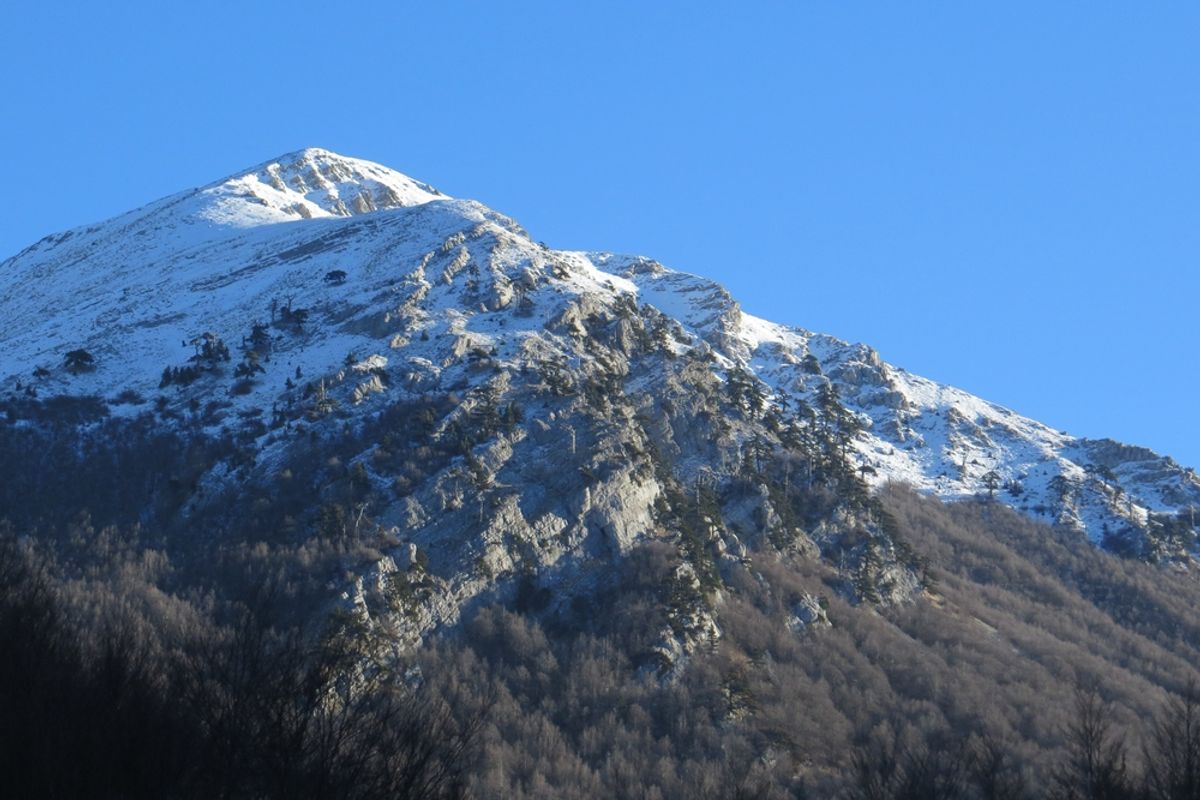
The mountains in northwestern Calabria were once home to a Bronze Age community, and perhaps a startling family secret. An international team of researchers from the Max Planck Harvard Research Center for the Ancient Mediterranean in Germany and the University of Bologna in Italy has, for the first time, reconstructed the social and genetic profiles of a 3,500-year-old Protoapennine community in a recent study published in Nature Communications.
Using archaeological remains recovered from the Grotta della Monaca — a notable cave and archeological site in southern Italy — the research team revealed cultural practices, population history, and kinship patterns of this Bronze Age community.
“Situated over 600 meters above sea level in the Pollino massif, Grotta della Monaca continues to reveal key evidence about the first complex societies of Southern Italy — and, more broadly, about the biological and cultural roots of human diversity,” said Felice Larocca, speleoarchaeologist and director of the research at Grotta della Monaca, in a press release.
Read More: Neolithic Ireland Was Likely Not Ruled by Incestuous God-Kings
The Myseries of a Bronze Age Cave
Previous findings from the Grotta della Monaca suggest that this site was used for iron and copper exploitation and for funeral practices.
From the human remains, researchers extracted DNA and conducted analyses. The results indicated that the remains dated between 1780 B.C.E. and 1380 B.C.E., helping the research team determine where in the Mediterranean Bronze Age this community fit.
“Our analysis shows that the Grotta della Monaca population shared strong genetic affinities with Early Bronze Age groups from Sicily, yet lacked the eastern Mediterranean influences found among their Sicilian contemporaries,” said Francesco Fontani, first author of the study and affiliated researcher at the Max Planck Harvard Research Center for the Ancient Mediterranean, in the press release.
“This suggests that, while in contact across the Strait of Messina, Tyrrhenian Calabria followed its own demographic and cultural trajectories during prehistory,” Fontani added.
What DNA Reveals About Bronze Age Communities
In addition to the community’s age, the DNA results indicated that although this community lived in mountain caves, it was not completely isolated from other human groups. At least two individuals from the cave shared DNA with communities found in northern Italy.
There were ancestral lines to Anatolian Neolithic farmers, European hunter-gatherers, and Steppe pastoralists. This community likely consumed milk and other dairy products, despite carrying genetic variants associated with adult lactose intolerance.
“[This] illustrates how cultural adaptation can precede genetic evolution,” said Donata Luiselli, co-senior author of the study and head of the Ancient DNA Laboratory at the University of Bologna, in the press release. “These people had developed dietary strategies that allowed them to thrive in a challenging mountain environment, despite lacking genetic tolerance to lactose.”
A Surprising Find
By combining research data on archaeological and anthropological finds with DNA evidence, the research team also determined burial structures and funeral practices based on sex and kinship.
The most shocking discovery, according to the research team, was an incestuous paring, which is the first of its kind to be documented in prehistoric Europe.
“This finding emphasizes the distinction between unambiguous biological evidence and its social meaning,” said Alissa Mittnik, a lead researcher at the Department of Archaeogenetics of the Max Planck Institute for Evolutionary Anthropology, and co-senior author of the research, in the press release. “This exceptional case may indicate culturally specific behaviours in this small community, but its significance ultimately remains uncertain.”
According to the research team, the findings from Grotta della Monaca rewrite our understanding of caves in Protoapennine culture. Once believed to be an isolated space, this cave appears to have been a sacred burial site that also symbolized family and community bonds.
Read More: Ancient Cooking Ware Confirms Horses Were Domesticated in Early Bronze-Age Sicily
Article Sources
Our writers at Discovermagazine.com use peer-reviewed studies and high-quality sources for our articles, and our editors review for scientific accuracy and editorial standards. Review the sources used below for this article:

